The great debate on Medicare
Article By: Cynthia Ross Cravit
Private medical clinics are opening across Canada on an average of one per week, although they are technically prohibited under the Canada Health Act.
It is a situation many considered unthinkable before last June’s now famous Supreme Court of Canada decision. The court ruled that a Quebec provincial ban on private health insurance was unconstitutional when patients were suffering, or even dying, on waiting lists.
While the decision applied directly to Quebec, it has generated calls for private clinics and private insurance in provinces across the country, as governments hope to forestall similar court decisions.
In February, Lieutenant governor of British Columbia, Iona Campagnolo said in a Throne speech, “Does it really matter to patients where or how they obtain their surgical treatment if it is paid for with public funds?”
Campagnolo said the BC government’s vision for a new provincial health care system would resemble those in Western Europe, where governments pay for essential treatment delivered in both public and private hospitals. To this end, Liberal Premier Gordon Campbell recently toured Sweden, Norway, France and the United Kingdom to explore new approaches to improve BC’s health care system.
And Conservative Premier Ralph Klein of Alberta has recently promised legislation to permit doctors to work simultaneously in private and public institutions and to allow the building of new private hospitals.
Ordered by the Supreme Court to produce a plan for healthcare reform within a year, Liberal Quebec Premier Jean Charest has proposed that private insurance could cover knee and hip replacements and cataract eye surgery. In addition, public hospitals could subcontract to private clinics for such procedures if the hospitals were unable to deliver the services within six months.
Not surprisingly, these proposed changes to public health care, long considered politically sacrosanct and central to Canada’s national identity, have spurred vigorous public debate. While advocates of private clinics say they will shorten waiting lists at public hospitals, critics warn they will drain the public system of doctors and other health care workers. Canada already has a national doctor shortage, with 1.4 million people in Ontario alone without the services of a family doctor.
An Ontario Medical Association study said the province could have a 2,800-doctor shortage by 2010 if action isn't taken immediately.
Meanwhile, Dr. Brian Day, president and director of the private The Cambie Surgery Centre in Vancouver, employs 120 doctors to treat the growing numbers of patients that public hospitals send them because they are too busy to treat. Dr. Day, incoming president of the Canadian Medical Association, is opening a clinic in Toronto, and plans to expand into Ottawa, Montreal, Calgary and Edmonton.
According to Dr. Day, nearly 30 per cent of health care is already private if you count dentistry and drugs. For the direct delivery of medically necessary services, “I think it needs no more than five per cent or 10 per cent,” Day told Macleans magazine.
The Canadian Medical Association (CMA) has offered a checklist of ten principles to guide the emerging debate and discussion on proposed changes to the health care system, including:
Timely access: Canadians should have timely access to medically necessary care and recourse should the wait time be too long.
Equality: access to medical care should be based on need, not ability to pay.
Choice: patients should have choice of physician, and physicians should be able to choose their practice environment.
Comprehensiveness: a full spectrum of medically necessary care should be available.
Clinical autonomy: the autonomous decision-making within the patient-physician relationship must be protected.
Quality: public and private health care sectors must be held to the same high-quality standards and should be independently monitored.
Professional responsibility: the medical profession has a responsibility to promote the strongest possible health care system.
Transparency: decisions affecting the mix of public-private funding and delivery must be made through an open and transparent process.
Accountability: public and private health sectors should be held to the same high accountability standards, including clinical outcomes, full cost accounting and value-for money for the use of public funds
Efficiency: the public and private sectors should be structured to optimize the use of human and other resources.
To date, Canada is the only industrialized country that forbids privately financed purchases of core medical services. Prime Minister Stephen Harper has not yet proposed sweeping changes to the health care system, although he has said he favors guaranteed waiting times for services. Health minister Tony Clement is reportedly looking for ways to reduce wait times, as well as to modernize equipment and increase the supply of doctors.
According to the Fraser Institute, a conservative think tank, the median wait time between a referral by a family doctor and an appointment with a specialist is now 8.3 weeks, compared to 3.7 weeks in 1993.
In a recent Ipsos Reid survey, 28 per cent of Canadians picked the establishment of patient wait time guarantees as their number one priority for the new Tory minority government.
Saturday, April 08, 2006
globeandmail.com : Health care
globeandmail.com : Health care: "Health care
Take a trip Down Under to learn about health care
ALAN CASSELS
Special to Globe and Mail Update
There's been a wee bit of controversy out here on the Left Coast after B.C. Premier Gordon Campbell and a group of government officials left for Europe to scope out how various countries deal with public-private issues in health-care delivery.
I don't know what all the fuss is about. I mean, if the government is genuinely looking elsewhere for better ways to manage health care, who can argue against a pilgrimage to other jurisdictions? Travel can broaden the mind, so we should be encouraging politicians and decision-makers of all stripes to travel even more if there is a likelihood they'll be able to reimport good ideas about making health care sustainable."
They maximized health-care spending by shopping around for the best prices. They negotiated lower prices on almost all drugs and tendered contracts on major drug purchases to the lowest bidder, in essence forcing drug companies to do what every other industry has to do to survive: compete. If the Canadian government wants to buy services or goods, it issues a Request for Proposals and then buys based on value and price. New Zealand does this for prescription drugs. What a concept.
The drug-plan costs in New Zealand over the past 12 years have risen about 4 per cent per year; ours grew by 12 per cent to 14 per cent per year.
Take a trip Down Under to learn about health care
ALAN CASSELS
Special to Globe and Mail Update
There's been a wee bit of controversy out here on the Left Coast after B.C. Premier Gordon Campbell and a group of government officials left for Europe to scope out how various countries deal with public-private issues in health-care delivery.
I don't know what all the fuss is about. I mean, if the government is genuinely looking elsewhere for better ways to manage health care, who can argue against a pilgrimage to other jurisdictions? Travel can broaden the mind, so we should be encouraging politicians and decision-makers of all stripes to travel even more if there is a likelihood they'll be able to reimport good ideas about making health care sustainable."
They maximized health-care spending by shopping around for the best prices. They negotiated lower prices on almost all drugs and tendered contracts on major drug purchases to the lowest bidder, in essence forcing drug companies to do what every other industry has to do to survive: compete. If the Canadian government wants to buy services or goods, it issues a Request for Proposals and then buys based on value and price. New Zealand does this for prescription drugs. What a concept.
The drug-plan costs in New Zealand over the past 12 years have risen about 4 per cent per year; ours grew by 12 per cent to 14 per cent per year.


Thursday, April 06, 2006
winnipegsun.com - Editorial - CFS move disturbing
winnipegsun.com - Editorial - CFS move disturbing: "Though it wasn't intentional, provincial officials may have exposed some glaring deficiencies this week in how they monitor the children in their care.
Child and Family Services authorities announced this week that staff have been instructed to check on all 6,100 children under their care over the next 30 days to ensure they are receiving appropriate services.
The move comes in the wake of the tragic death of five-year-old Phoenix Sinclair, who was allegedly killed by her mother and her mother's boyfriend three months after her file was closed by CFS.
It's unknown how this little girl could have fallen through the cracks the way she did. Manitobans now want answers.
To that end, the province has announced two reviews to look into this tragedy -- one internal and one external. And hopefully they will get to the bottom of it to ensure it doesn't happen again.
In the meantime, CFS officials have told their staff to rush out and check on the 6,100 children still under their care to see if they're all right. The union representing social workers has called the deadline impossible to meet.
It's a development we find terribly troubling.
Because it begs the question: are CFS officials not checking on these children already, on a regular basis?
Why the need for this sudden system-wide checkup?
CFS officials also announced this week that they have instructed staff to review files that have been closed in recent months.
We understand why CFS would want to take a second look at those files. It's unlikely that once a file is closed -- if it was closed for good reasons -- the child in question would be monitored by the state any further.
It seems prudent to have a second look at those in light of the Phoenix Sinclair tragedy.
But to ord"
Child and Family Services authorities announced this week that staff have been instructed to check on all 6,100 children under their care over the next 30 days to ensure they are receiving appropriate services.
The move comes in the wake of the tragic death of five-year-old Phoenix Sinclair, who was allegedly killed by her mother and her mother's boyfriend three months after her file was closed by CFS.
It's unknown how this little girl could have fallen through the cracks the way she did. Manitobans now want answers.
To that end, the province has announced two reviews to look into this tragedy -- one internal and one external. And hopefully they will get to the bottom of it to ensure it doesn't happen again.
In the meantime, CFS officials have told their staff to rush out and check on the 6,100 children still under their care to see if they're all right. The union representing social workers has called the deadline impossible to meet.
It's a development we find terribly troubling.
Because it begs the question: are CFS officials not checking on these children already, on a regular basis?
Why the need for this sudden system-wide checkup?
CFS officials also announced this week that they have instructed staff to review files that have been closed in recent months.
We understand why CFS would want to take a second look at those files. It's unlikely that once a file is closed -- if it was closed for good reasons -- the child in question would be monitored by the state any further.
It seems prudent to have a second look at those in light of the Phoenix Sinclair tragedy.
But to ord"
Sunday, April 02, 2006
Outbreak - Anatomy of a potential killer
winnipegsun.com - Outbreak - Anatomy of a potential killer: "Flu viruses undergo mild changes every year, which creates a need for annual flu shots to combat each new strain.
About three times each century, a dramatic shift in an influenza strain occurs, creating a new version the human immune system has no antibodies or immune cells to fight.
Pandemic influenza begins when that new strain causes significant illness and spreads efficiently from human to human around the world.
Whether it's a deadly strain of H5N1 avian influenza or begins from a different Influenza A flu strain, a pandemic may still be years away.
The incubation period would be about one to three days. "
About three times each century, a dramatic shift in an influenza strain occurs, creating a new version the human immune system has no antibodies or immune cells to fight.
Pandemic influenza begins when that new strain causes significant illness and spreads efficiently from human to human around the world.
Whether it's a deadly strain of H5N1 avian influenza or begins from a different Influenza A flu strain, a pandemic may still be years away.
The incubation period would be about one to three days. "
Saturday, April 01, 2006
More Ministry of Health BS
Why can we not ust let people do there jobs without unhelpful interfernce from overpaid Ministry of Health zealots- QJ More forms -more checklists -more useless work by the government idiots
Osprey Media. - Brantford Expositor: "Long-term concerns?
The numbers may not tell the whole story
By Susan Gamble
Local News - Saturday, April 01, 2006 @ 01:00
What happened?
Two years ago, Brantford and Brant County�s long-term care homes were right in line with the rest of the province in their numbers of unmet standards and verified concerns.
But the Ministry of Health�s current Web site shows an odd change: while statistics for unmet standards have dropped across the province, they more than doubled in Brantford and Brant."
Osprey Media. - Brantford Expositor: "Long-term concerns?
The numbers may not tell the whole story
By Susan Gamble
Local News - Saturday, April 01, 2006 @ 01:00
What happened?
Two years ago, Brantford and Brant County�s long-term care homes were right in line with the rest of the province in their numbers of unmet standards and verified concerns.
But the Ministry of Health�s current Web site shows an odd change: while statistics for unmet standards have dropped across the province, they more than doubled in Brantford and Brant."
Wednesday, March 22, 2006
globeandmail.com : Dying man denied free drug
globeandmail.com : Dying man denied free drug: "Toronto-based hematologist Donna Reece, who specializes in multiple myeloma, said the decision to stop releasing Thalomid and Ontario's refusal to fund Velcade has turned the treatment clock back a decade.
'We are back in the dark ages,' Dr. Reece said in a telephone interview. '. . . This is a patient-care crisis for cancer-care delivery in this province.'
Thalomid works by helping starve tumours. It also helps stimulate cells of the immune system to attack cancer cells.
'. . . This will be an absolute catastrophe for our patients because Velcade isn't funded,' Dr. Reece said. 'This is a crisis right now for multiple myeloma because we cannot deliver anything close to the standard of care for our patients.' "
'We are back in the dark ages,' Dr. Reece said in a telephone interview. '. . . This is a patient-care crisis for cancer-care delivery in this province.'
Thalomid works by helping starve tumours. It also helps stimulate cells of the immune system to attack cancer cells.
'. . . This will be an absolute catastrophe for our patients because Velcade isn't funded,' Dr. Reece said. 'This is a crisis right now for multiple myeloma because we cannot deliver anything close to the standard of care for our patients.' "
Monday, March 20, 2006
Without a transplant, he'll die
Great - how do we help this man ? QJ
Without a transplant, he'll die: "Pamela Cowan, Leader-Post
Published: Monday, March 20, 2006
When Joshua MacPhee died, many people benefited from the teen's organs because he signed an organ donation card.
Now his 44-year-old father is running out of time as he waits for a liver donor.
About two years ago, Terry MacPhee was diagnosed with liver cancer.
He was assessed and he qualified for a liver transplant at Edmonton's University of Alberta Hospital in September 2004, but no liver was available so he was put on a transplant waiting list."
Without a transplant, he'll die: "Pamela Cowan, Leader-Post
Published: Monday, March 20, 2006
When Joshua MacPhee died, many people benefited from the teen's organs because he signed an organ donation card.
Now his 44-year-old father is running out of time as he waits for a liver donor.
About two years ago, Terry MacPhee was diagnosed with liver cancer.
He was assessed and he qualified for a liver transplant at Edmonton's University of Alberta Hospital in September 2004, but no liver was available so he was put on a transplant waiting list."
Advisor.ca - Daily News
Advisor.ca - Daily News: "New tax strategies for medical professionals
February 28, 2006 | Kate McCaffery
Doctors and dentists in Ontario have a relatively new option at their disposal for income splitting and other tax planning strategies.
At the end of 2005, the Government of Ontario expanded ownership rules for doctor and dentists' professional corporations that give those clients the right to issue non-voting shares of the corporation to family members. Although this kind of income splitting is one of the main benefits of incorporation, when the government first allowed Ontario professionals to incorporate back in 2002, they included rules that said shares of a professional corporation could only be owned by the professional.
Other professionals, including lawyers and accountants, are not covered by the changes. "
February 28, 2006 | Kate McCaffery
Doctors and dentists in Ontario have a relatively new option at their disposal for income splitting and other tax planning strategies.
At the end of 2005, the Government of Ontario expanded ownership rules for doctor and dentists' professional corporations that give those clients the right to issue non-voting shares of the corporation to family members. Although this kind of income splitting is one of the main benefits of incorporation, when the government first allowed Ontario professionals to incorporate back in 2002, they included rules that said shares of a professional corporation could only be owned by the professional.
Other professionals, including lawyers and accountants, are not covered by the changes. "
winnipegsun.com - Canada News - State child care first: YWCA
Will 80 opinions(20X4) by a self interest group take your parent's child care by right money away?QJ
winnipegsun.com - Canada News - State child care first: YWCA: "The YWCA commissioned four community task forces from fall 2004 to fall 2005 to address how local resources could be organized to strengthen child care and create a viable model for service delivery.
The task forces, in Halifax, Vancouver, Martensville, Sask., and Cambridge, Ont., were made up of between 20 and 30 local residents, including parents, service providers and business people. "
winnipegsun.com - Canada News - State child care first: YWCA: "The YWCA commissioned four community task forces from fall 2004 to fall 2005 to address how local resources could be organized to strengthen child care and create a viable model for service delivery.
The task forces, in Halifax, Vancouver, Martensville, Sask., and Cambridge, Ont., were made up of between 20 and 30 local residents, including parents, service providers and business people. "
Thursday, March 16, 2006
Big bellies lead to cardiovascular disease
Beware the new fat crusaders are on the prowl- QJ
Big bellies lead to cardiovascular disease: "According to the International Day for the Evaluation of Abdominal Obesity (IDEA) Study, abdominal obesity is now pandemic, with Canadians weighing in among the heaviest in the world. The results were released in Atlanta Tuesday.
More than 170,000 people in 63 countries including 135 family physicians and 3,000 patients in Canada participated in the study, the largest of its kind. Around the world, 6,000 family doctors tape-measured their patients' stomachs.
The study reported a worldwide prevalence of known cardiovascular disease as 16 per cent for men, ranging from 10 per cent in Latin America to 26 per cent in Eastern Europe. For women, the numbers were lower at 12.5 per cent, ranging from seven per cent in North America to 23 per cent in Eastern Europe.
Doctors found a clear relationship between waist size and heart disease"
Big bellies lead to cardiovascular disease: "According to the International Day for the Evaluation of Abdominal Obesity (IDEA) Study, abdominal obesity is now pandemic, with Canadians weighing in among the heaviest in the world. The results were released in Atlanta Tuesday.
More than 170,000 people in 63 countries including 135 family physicians and 3,000 patients in Canada participated in the study, the largest of its kind. Around the world, 6,000 family doctors tape-measured their patients' stomachs.
The study reported a worldwide prevalence of known cardiovascular disease as 16 per cent for men, ranging from 10 per cent in Latin America to 26 per cent in Eastern Europe. For women, the numbers were lower at 12.5 per cent, ranging from seven per cent in North America to 23 per cent in Eastern Europe.
Doctors found a clear relationship between waist size and heart disease"
Monday, March 13, 2006
Canada Health guide dangerous to your Health
This is not the first time Health Canada's conduct has been questioned from an ethical standpoint. Three Health Canada scientists, who described themselves as whistle-blowers, were fired on the same day in 2004, purportedly for insubordination. They said they were being pressured to approve drugs despite safety concerns. In the late 1990s, the three had opposed bovine growth hormone, which enhances milk production in cows.
Freedhoff calculated calorie intake recommended in the drafts of the Food Guide and concluded it would be fattening. He said the food guide should include recommendations on calorie intake.
"Canada's Food Guide is not meant to be a weight-loss program but, at the same time, it should not be obesogenic," Freedhoff wrote.
This comes at a time of increasing concern about the health and fitness of Canadians, and specifically a rise in obesity.
The possibility that a government agency charged with overseeing Canadians' health might be allowing itself to be infiltrated and influenced by organizations with a vested interest is a serious matter.
For the individual, indications are that one may be better off following a respected diet book than Canada's Food Guide.
Saturday, March 11, 2006
Doctor dog - Health - Browse Health Articles.
Doctor dog - Health - Browse Health Articles.: "Doctor dog
Article By: Cynthia Ross Cravit
Man's best friend may turn out to be a first line of defense for cancer
Researchers at the relatively unknown non-profit Pine Street Foundation in Northern California claim they have trained dogs to identify patients with breast or lung cancer -- based on the smell of their breath � with near perfect accuracy. "
Article By: Cynthia Ross Cravit
Man's best friend may turn out to be a first line of defense for cancer
Researchers at the relatively unknown non-profit Pine Street Foundation in Northern California claim they have trained dogs to identify patients with breast or lung cancer -- based on the smell of their breath � with near perfect accuracy. "
Thursday, March 02, 2006
Alberta's health reform should respect Canada Health Act, says Harper
It is all about choice
Alberta's health reform should respect Canada Health Act, says Harper: "Although Alberta's proposal lacks detail it would appear to permit queue-jumping by patients willing to pay for faster treatment, and would allow doctors to work in the public and private systems simultaneously.
Michael Decter, chairman of the Health Council of Canada, said his early reading of the Alberta plan is that it would in fact contravene the federal health law.
'The Alberta paper, if I'm reading it correctly, seems to propose a private, parallel system . . . and it is difficult for me to see how you can do that without violating the Canada Health Act.
He noted that Alberta's plan goes farther than Quebec's recently announced health reforms.
Quebec would force doctors to choose between the private and public systems, while the Alberta plan would allow doctors to work on both sides simultaneously. Experts believe giving doctors access to medicare patients as well as those willing to pay for private care represents a threat to the public system.
Quebec would give patients access to private care only if the public system cannot deliver the care within a reasonable time, while the Alberta plan lacks any such restriction.
'It looks as though they may be preparing to allow people to simply buy insurance for medically necessary service and that, absent some waiting list test, strikes me as unlikely to pass muster,'' said Decter.
Tom McIntosh of the Health Policy Research Networks said Alberta's plan, if it does proceed, does have the potential to undermine Canada's medicare system. "
Alberta's health reform should respect Canada Health Act, says Harper: "Although Alberta's proposal lacks detail it would appear to permit queue-jumping by patients willing to pay for faster treatment, and would allow doctors to work in the public and private systems simultaneously.
Michael Decter, chairman of the Health Council of Canada, said his early reading of the Alberta plan is that it would in fact contravene the federal health law.
'The Alberta paper, if I'm reading it correctly, seems to propose a private, parallel system . . . and it is difficult for me to see how you can do that without violating the Canada Health Act.
He noted that Alberta's plan goes farther than Quebec's recently announced health reforms.
Quebec would force doctors to choose between the private and public systems, while the Alberta plan would allow doctors to work on both sides simultaneously. Experts believe giving doctors access to medicare patients as well as those willing to pay for private care represents a threat to the public system.
Quebec would give patients access to private care only if the public system cannot deliver the care within a reasonable time, while the Alberta plan lacks any such restriction.
'It looks as though they may be preparing to allow people to simply buy insurance for medically necessary service and that, absent some waiting list test, strikes me as unlikely to pass muster,'' said Decter.
Tom McIntosh of the Health Policy Research Networks said Alberta's plan, if it does proceed, does have the potential to undermine Canada's medicare system. "
Tuesday, February 28, 2006
CANOE -- CNEWS - Politics: Tories: May be long wait to cap wait times
CANOE -- CNEWS - Politics: Tories: May be long wait to cap wait times: "OTTAWA (CP) - There could be a long wait time for the new Conservative plan to cap medical wait times. Health Minister Tony Clement acknowledges it will take a lot of work with provinces to implement the 'care guarantee' that his party promised during the election campaign.
The purpose of the guarantee is to ensure that patients get care within clinically acceptable time limits even if that means they must be sent to another province or country.
Details of the proposal have not been spelled out.
'It's not one of those ones where I can sort of waltz into the House of Commons and slap a bill down and say, 'OK, problem solved,' ' Clement said in an interview.
'This one takes a lot of collaboration with the provinces and territories. This is one where you're going to have to have people rowing in the same direction in order to make some progress.'
Manitoba Health Minister Tim Sale has already spoken against the notion of care guarantees, saying none of the provinces have extra capacity in the key areas where the most pain is.
David Spencer, a spokesman for Ontario Health Minister George Smitherman, said his province already has a wait times strategy, including a program for out-of-country treatment. "
The purpose of the guarantee is to ensure that patients get care within clinically acceptable time limits even if that means they must be sent to another province or country.
Details of the proposal have not been spelled out.
'It's not one of those ones where I can sort of waltz into the House of Commons and slap a bill down and say, 'OK, problem solved,' ' Clement said in an interview.
'This one takes a lot of collaboration with the provinces and territories. This is one where you're going to have to have people rowing in the same direction in order to make some progress.'
Manitoba Health Minister Tim Sale has already spoken against the notion of care guarantees, saying none of the provinces have extra capacity in the key areas where the most pain is.
David Spencer, a spokesman for Ontario Health Minister George Smitherman, said his province already has a wait times strategy, including a program for out-of-country treatment. "
Monday, February 27, 2006
Friday, February 24, 2006
Thursday, February 23, 2006
Laugh for Better Blood Vessels - RealAge Tip of the Day
Laugh for Better Blood Vessels - RealAge Tip of the Day: "Laugh for Better Blood Vessels
Laugh your way to better blood vessel function by watching a funny flick.
Laughter relaxes blood vessels and increases blood flow -- the exact opposite of what your blood vessels do when you are stressed. In a small study of healthy men and women with normal blood pressure, watching a funny movie increased blood flow by about 22 percent. If funny movies aren't your style, spend time with the people who tickle your funny bone.
RealAge Benefit: Laughing often can make your RealAge up to 8 years younger. "
Laugh your way to better blood vessel function by watching a funny flick.
Laughter relaxes blood vessels and increases blood flow -- the exact opposite of what your blood vessels do when you are stressed. In a small study of healthy men and women with normal blood pressure, watching a funny movie increased blood flow by about 22 percent. If funny movies aren't your style, spend time with the people who tickle your funny bone.
RealAge Benefit: Laughing often can make your RealAge up to 8 years younger. "
Tuesday, February 21, 2006
A childless culture
A childless culture: "Canadian families do not make babies like they used to. A dramatic decline in fertility in recent decades, combined with an aging population, has the potential to transform every aspect of Canadian society, from schools and housing to social attitudes toward family. In this, the first of a four-part series, the National Post examines the far-reaching implications of the fertility crisis."
Friday, February 17, 2006
Ont. considers presumed consent for organ donations
What do you think ? An intrusion or a right for a good government cause? QJ
Ont. considers presumed consent for organ donations: "TORONTO -- The question of whether to make Ontario the first jurisdiction in Canada to allow hospitals to harvest organs from dying patients who don't register an objection is proving a weighty one for the province's elected officials.
New Democrat member Peter Kormos introduced a private member's bill Thursday that would presume consent for organ donations from any dying patient who hasn't already made their wishes clear. "
Ont. considers presumed consent for organ donations: "TORONTO -- The question of whether to make Ontario the first jurisdiction in Canada to allow hospitals to harvest organs from dying patients who don't register an objection is proving a weighty one for the province's elected officials.
New Democrat member Peter Kormos introduced a private member's bill Thursday that would presume consent for organ donations from any dying patient who hasn't already made their wishes clear. "
Wednesday, February 15, 2006
Man ready to go to U.S. to extend his life
It is all about Life and death choices - the man wants to live not more excuses from the health system which is supposed to be universal and free . What great value from his tax contribution . Discusting - this non delivery of universal care myth in Canada, QJ
Man ready to go to U.S. to extend his life: "Man ready to go to U.S. to extend his life
Article Tools
Printer friendly
E-mail
Font: * * * * Pamela Cowan, Leader-Post
Published: Wednesday, February 15, 2006
Even as he underwent chemotherapy Tuesday afternoon, a desperate Swift Current man was planning to go to the United States to get a cancer drug that the Saskatchewan government has yet to approve.
'I don't think I can wait any longer,' said Bob Loeppky, 64. 'I have to look at other options so I'll either go to Minot, (N.D.) Great Falls (Mont.) or the Mayo Clinic in Rochester (Minn). It will depend on the travel connections.'"
Man ready to go to U.S. to extend his life: "Man ready to go to U.S. to extend his life
Article Tools
Printer friendly
Font: * * * * Pamela Cowan, Leader-Post
Published: Wednesday, February 15, 2006
Even as he underwent chemotherapy Tuesday afternoon, a desperate Swift Current man was planning to go to the United States to get a cancer drug that the Saskatchewan government has yet to approve.
'I don't think I can wait any longer,' said Bob Loeppky, 64. 'I have to look at other options so I'll either go to Minot, (N.D.) Great Falls (Mont.) or the Mayo Clinic in Rochester (Minn). It will depend on the travel connections.'"
B.C. eyes mixed health care
Finally choice and a step in the right direction QJ
B.C. eyes mixed health care: "VICTORIA - The British Columbia government signalled yesterday it will introduce major health care reforms -- including examining European models that offer a blend of publicly and privately delivered services -- to stem escalating costs that have made the existing system unsustainable.
In a Throne Speech with a heavy focus on health care, Premier Gordon Campbell's Liberals pledged to update the Canada Health Act on their own, if necessary."
B.C. eyes mixed health care: "VICTORIA - The British Columbia government signalled yesterday it will introduce major health care reforms -- including examining European models that offer a blend of publicly and privately delivered services -- to stem escalating costs that have made the existing system unsustainable.
In a Throne Speech with a heavy focus on health care, Premier Gordon Campbell's Liberals pledged to update the Canada Health Act on their own, if necessary."
Saturday, February 04, 2006
12 Ways to Make Your RealAge Younger
12 Ways to Make Your RealAge Younger: "Below are the top 12 Grow Younger� strategies designed to make your RealAge younger. For personalized recommendations, take the RealAge test. "
Tuesday, January 24, 2006
Building the perfect dream team
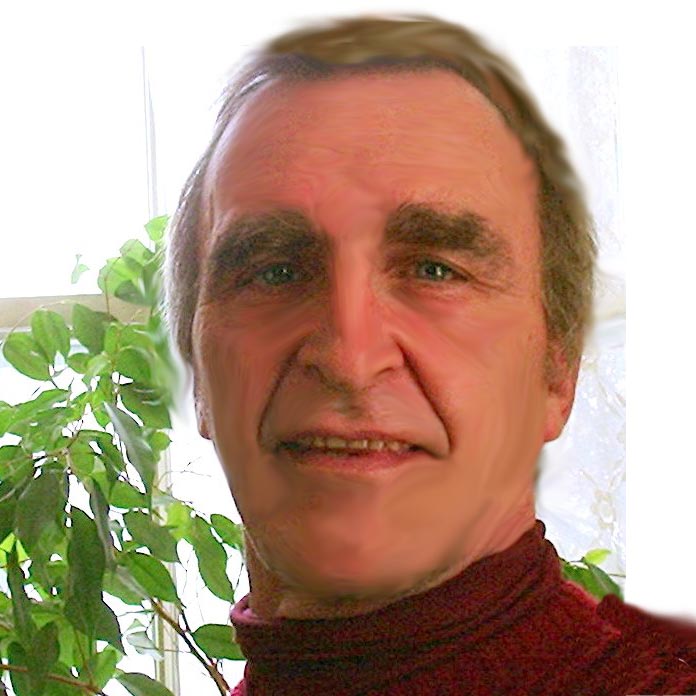
Building the perfect team starts with you
Sieg Holle BS MBA
(Jan 2006) You can't do everything well. Actually, I'd go one further than that: there are a lot of things you shouldn't even think of doing yourself! I've met and consulted with many of the country's top-performing business advisors, and if they share one trait in common, it's this: they choose to focus only on those activities that make them the most successful, the most productive, and the most motivated. They delegate everything else, and that is part of the reason for their success.
Of course, it took time for these top performers to realize they couldn't reasonably do everything in their practices. Then they had to think a good deal about how they were going to give up control of various tasks and duties without eroding brand integrity. In many cases, this was the single most difficult challenge they had to overcome on their way to the top of their profession. Then they had to find the right people to give those responsibilities to. All of this took time, a good deal of strategy, and a multitude of teams. But make no mistake. The results have far surpassed their wildest expectations.
Let's assume that you share something in common with these top performers: you see big opportunities for your business practice. To capture these opportunities, you've come to realize that you need to give up control over certain tasks in order for you to take advantage of these opportunities. Do you see yourself assembling a team that will not only get the job done, but will get it done so well that existing clients and customers will never think of leaving, and new clients will be beating down your door to meet with you?
How are you going to do it? How do you find the right people? How can you determine whether these people have the "right stuff" that will take your business to the next level? What can you do to get them up to speed on how you intend to build your business?
The ultimate marketing tool YOU
Rethinking the marketing newsletter
The rules of niche marketing
All of these are good questions. And all of them can be answered by thinking of team building as a strategic process, rather than something that just "happens." At the centre of this process is an understanding that a top performing team is comprised of three components, or "sub-teams."
(a) The Team Director or leader: The visionary leader who ensures all elements of the team are working together according to plan, and motivates team members to continually further business goals;
(b) The strategy team: Helps the Team Director set appropriate short-term and long-term business goals and formulate the core team;
(c) The core team: Individuals who excel at their specific tasks necessary for the business to accomplish its goals, yet can work together to achieve the Team Director's vision.
With this concept in mind, you can see team building is more than simply matching an individual to a job description. Rather, it's a systematic search for appropriate people who can competently help you through a new phase of growth.
Let's take a look at each of these sub-teams, in order to better understand their roles and how they work together. Keep in mind that while large, established business have a single person filling each of these roles, it's entirely possible that one or two people may wear several hats in any of these sub-teams (in fact, that's how most business people start out in the business).
The Team Director- Team leader
This is the leader of the business, and the most important member of the team-in other words, you. A team cannot function properly if they don't understand the vision for the business. They can't support you if they don't know your style and approach. As team leader, this is your primary responsibility-to align your team with your process and your business vision in order to achieve your business goals. If for whatever reason you feel you lack the skills to successfully communicate a business vision to team members, you must find a partner who has these skills.
The Strategy Team of advisors
Once you've clarified your role as Team Director, you need to establish a Strategy Team (I've heard some consultants refer to this group as the "growth team"). The strategy team is the group that directs big-picture business strategy, identifying business-building opportunities and defining long-term growth goals. This is the team that steers the business toward its success, helping you to assemble the ideal team which will take you where you want to go. It also monitors your progress towards those goals on a regular basis.
In addition to you, the Strategy Team can include one or all of the following:
Business coach: A like-minded, experienced expert who understands the operating challenges of the business, and can help capitalize on new opportunities
Professionals: HR professionals, business consultants, etc., who bring upper-level strategy and thinking to specific business challenges
Branch manager: A guide to help you utilize the firm's strategic and marketing resources to build your business
Peers and mentors: A set of business owners and entrepreneurs from both inside and outside the financial industry
Marketing associate: Your internal marketing expert, who has a natural "knack" for co-ordinating and systemizing marketing efforts
Industry wholesalers: Select outside of company representatives who have demonstrated themselves as an excellent resource for strategic marketing and business-building ideas
Client focus group: A small group of trusted clients who can give you honest, objective feedback on what you're doing right and what needs improvement
The Core TeamThese are the people who get the job done day in and day out. While the strategy team deals with higher-level strategy, your core team delivers management and client service systems. In addition to you, the common positions are:
Business manager: Who ensures business processes and systems are running smoothly and who handles day-to-day issues with team members
Executive assistant: A versatile, detail-oriented assistant who can keep the team leader organized and ensures that all constituencies follow procedures
Junior advisors: These are your advisors-in-training; junior staff members who show promise and can be molded in your image
Associate advisors: Well-trained and qualified advisors who handle specific areas of your business , and may have a small group of their own clients
General administration assistant: Who deal with paperwork, general client requests, and general office duties
Professional centres of influence (COIs): Accountants, lawyers, private bankers, and other professionals who can function as "partners" on specific client accounts
In-house specialists: brand managers, and other experts who perform specific tasks for your clients
Marketing associate: A key position which executes day-to-day marketing tasks and long-range marketing projects (co-ordinating the client newsletter, setting up media appointments, booking seminars, etc.)
Marketing writer/designer: Outside brand-building and positioning experts who can help you attract ideal clients and distinguish yourself from the competition
Vendors: Printers, caterers, vendors, gifting-experts, and other companies who you can count on to support your client service process and deliver world-class service to your top clients
At first glance, this list seems a bit daunting. But what's even more daunting is the prospect of doing all of this yourself. If you can't find a way to delegate these tasks, that's exactly what you'll be doing.
Keep in mind that top performers all face the same issues that you do — including the harvesting of big opportunities. And they all found a way to get there. Top performers recognize that becoming the Team Director is the secret to success: they treat team building as a strategic process, one that demands serious planning, a multitude of teams, and a good deal of time investment and commitment .
(12/19/05)
Sieg Holle is the creator of the Earn-it program group, an organization that helps individuals build world-class, global marketing practices through innovative concepts, tools, and systems since 1989. Contact holcrest@worldchat.com or 1-519-754-0018 for more information about building your wealth through innovative business strategies.
Friday, January 20, 2006
FCPP Publications :: Dr. Mark Godley, Founder, Maples Surgical Clinic, Winnipeg
It is all about choice QJ
FCPP Publications :: Dr. Mark Godley, Founder, Maples Surgical Clinic, Winnipeg: "Frontier Centre: In Manitoba and beyond, you have become a symbol for the idea that we should expand healthcare choices for consumers. Was that planned or an accident?
Dr. Mark Godley: Initially our plan for the opening the Maples Surgical Centre in Winnipeg was built on the backbone of a contract with the Worker�s Compensation Board, back in 2001. Subsequently, we had no intention of leaving once we had set up our facility here. We have always felt that we had a role to play in the delivery of healthcare to all Manitobans.
FC: Why do you think we have such long waiting lists for healthcare procedures?
MG: Like the problems with any monopoly, like the Soviet Union and other Communist-bloc countries had, when you take away competition, you take away innovation and efficiency and creativity. When you combine all that together, you have a system that has a recipe for a lack of productivity. Only when we see the delivery of healthcare being provided through a competitive, free marketplace will we see the patient coming to the top of the pyramid.
FC: Did we make a crucial structural error in public policy when the parameters for the Canada Health Act were written?
MG: I think the Canada Health Act is very noble. But I believe there isn�t a government in Canada today that follows it at every level of functioning. I believe we could strive towards the principles and the values of the Canada Health Act only by changing our current system.
FC: Have you followed what happened in Sweden when they split the purchaser of healthcare from the provider?
MG: I haven�t followed the Swedish model very carefully. I do know that it was initially a success, and I do know that in other OECD countries such as Switzerland where there is a split betwee"
FCPP Publications :: Dr. Mark Godley, Founder, Maples Surgical Clinic, Winnipeg: "Frontier Centre: In Manitoba and beyond, you have become a symbol for the idea that we should expand healthcare choices for consumers. Was that planned or an accident?
Dr. Mark Godley: Initially our plan for the opening the Maples Surgical Centre in Winnipeg was built on the backbone of a contract with the Worker�s Compensation Board, back in 2001. Subsequently, we had no intention of leaving once we had set up our facility here. We have always felt that we had a role to play in the delivery of healthcare to all Manitobans.
FC: Why do you think we have such long waiting lists for healthcare procedures?
MG: Like the problems with any monopoly, like the Soviet Union and other Communist-bloc countries had, when you take away competition, you take away innovation and efficiency and creativity. When you combine all that together, you have a system that has a recipe for a lack of productivity. Only when we see the delivery of healthcare being provided through a competitive, free marketplace will we see the patient coming to the top of the pyramid.
FC: Did we make a crucial structural error in public policy when the parameters for the Canada Health Act were written?
MG: I think the Canada Health Act is very noble. But I believe there isn�t a government in Canada today that follows it at every level of functioning. I believe we could strive towards the principles and the values of the Canada Health Act only by changing our current system.
FC: Have you followed what happened in Sweden when they split the purchaser of healthcare from the provider?
MG: I haven�t followed the Swedish model very carefully. I do know that it was initially a success, and I do know that in other OECD countries such as Switzerland where there is a split betwee"
Thursday, January 12, 2006
Company plans private health care for Ont. this summer
Company plans private health care for Ont. this summer: "Company plans private health care for Ont. this summer
Across Canada by 2007
Don Copeman, president and founder of Copeman Healthcare, plans to open private clinics in Toronto, London and Ottawa. He launched his first clinic in Vancouver and plans several more.
Published: January 12, 2006
TORONTO -- A private health-care company announced Wednesday that it plans to move into Ontario this summer and every major Canadian city by 2007, but the province's health minister threatened heavy fines if the company contravenes legislation. "
Across Canada by 2007
Don Copeman, president and founder of Copeman Healthcare, plans to open private clinics in Toronto, London and Ottawa. He launched his first clinic in Vancouver and plans several more.
Published: January 12, 2006
TORONTO -- A private health-care company announced Wednesday that it plans to move into Ontario this summer and every major Canadian city by 2007, but the province's health minister threatened heavy fines if the company contravenes legislation. "
Friday, December 30, 2005
Grits without honour
winnipegsun.com - Editorial - Grits without honour
If the Liberal Party of Canada had a shred of honour or decency left in it, Finance Minister Ralph Goodale would have tendered his resignation as a cabinet minister on Wednesday night, and it would have been immediately accepted by the PM.
Goodale's department is the subject of an RCMP investigation into whether there was a leak about changes to income trusts that allegedly resulted in a spurt of insider trading on the stock market before the announcement was officially made. Prime Minister Paul Martin said yesterday that he's standing by his embattled finance minister. "He is a person of the greatest integrity, and he will not be stepping down," Martin said.
If he's a person of such great integrity, however, then it's all the more reason why he should step down. Because, unlike the Liberals, we still believe in concepts like ministerial accountability and the greater good. And there's the bigger issue of the overall integrity of the government.
Goodale simply must resign as finance minister while his department is under criminal investigation.
If the Liberal Party of Canada had a shred of honour or decency left in it, Finance Minister Ralph Goodale would have tendered his resignation as a cabinet minister on Wednesday night, and it would have been immediately accepted by the PM.
Goodale's department is the subject of an RCMP investigation into whether there was a leak about changes to income trusts that allegedly resulted in a spurt of insider trading on the stock market before the announcement was officially made. Prime Minister Paul Martin said yesterday that he's standing by his embattled finance minister. "He is a person of the greatest integrity, and he will not be stepping down," Martin said.
If he's a person of such great integrity, however, then it's all the more reason why he should step down. Because, unlike the Liberals, we still believe in concepts like ministerial accountability and the greater good. And there's the bigger issue of the overall integrity of the government.
Goodale simply must resign as finance minister while his department is under criminal investigation.
Thursday, December 22, 2005
winnipegsun.com - Editorial - The waiting game
winnipegsun.com - Editorial - The waiting game: "The Doer government continues to do everything in its power to try to prevent the privately-owned Maples Surgical Centre from succeeding in Manitoba.
The Maples opened its doors in Winnipeg in 2001. And from the very first day of its operations, the NDP has been trying to shut the facility down"
The Maples opened its doors in Winnipeg in 2001. And from the very first day of its operations, the NDP has been trying to shut the facility down"
Tuesday, December 20, 2005
winnipegsun.com Politics again -what about the ustomers?
winnipegsun.com: "WCB pulls clinic's MRI patients
The Workers Compensation Board has stopped sending clients to the Maples Surgical Centre for MRIs, prompting accusations from the clinic's director that his facility has fallen victim to politics"
The Workers Compensation Board has stopped sending clients to the Maples Surgical Centre for MRIs, prompting accusations from the clinic's director that his facility has fallen victim to politics"
winnipegsun.com - Editorial - We're still waiting
winnipegsun.com - Editorial - We're still waiting: "Suspiciously, no benchmarks were provided for the fifth area the feds and provinces agreed to target -- access to diagnostic tests such as CAT scans and MRIs.
This is particularly disturbing because CAT scans and MRIs are vital diagnostic tools for three of the four other areas targeted for wait times reduction -- cancer treatment, cardiac disease and hip and knee replacements.
Thus, setting benchmarks for how long it should take to treat a patient after he or she is diagnosed is meaningless if the diagnosis is unduly delayed in the first place because the patient had to wait too long for a CAT scan or MRI.
Doctors have also warned that as the provinces shift around budgets to meet demands for improvement in these five targeted areas, wait times for other procedures will inevitably start to grow as they are starved for funding.
Our concern is that this so-called strategy to reduce wait times is starting to look more and more like a strategy to look busy while failing to reduce wait times. And that federal and provincial politicians will again do what they always do when it all falls apart: blame each other. "
This is particularly disturbing because CAT scans and MRIs are vital diagnostic tools for three of the four other areas targeted for wait times reduction -- cancer treatment, cardiac disease and hip and knee replacements.
Thus, setting benchmarks for how long it should take to treat a patient after he or she is diagnosed is meaningless if the diagnosis is unduly delayed in the first place because the patient had to wait too long for a CAT scan or MRI.
Doctors have also warned that as the provinces shift around budgets to meet demands for improvement in these five targeted areas, wait times for other procedures will inevitably start to grow as they are starved for funding.
Our concern is that this so-called strategy to reduce wait times is starting to look more and more like a strategy to look busy while failing to reduce wait times. And that federal and provincial politicians will again do what they always do when it all falls apart: blame each other. "
Monday, December 19, 2005
winnipegsun.com - Tom Brodbeck - Public solidly supports private MRIs
winnipegsun.com - Tom Brodbeck - Public solidly supports private MRIs: "Canadians know that the government monopoly system isn't working well and they're beginning to accept the fact that, in some cases, taxpayers should be able to spend their own money to get care for themselves and their families.
It's no different than what every other developed country in the world has -- a mix of universal health care with private options. "
It's no different than what every other developed country in the world has -- a mix of universal health care with private options. "
Friday, December 16, 2005
MRI choice- What is the problem?
The right of health choice debate - It comes down to service not government dictate QJ
winnipegsun.com - Manitoba - What's the problem?: "'When did we lose our freedom in this country?' said Corlett, who says he just wants to get better and return to work.
'Why do they have to control us?'
Corlett needs an MRI so his doctor can make a diagnosis and decide whether he needs surgery or not.In the meantime, he can't even lift his arm, much less work on airplanes.'I can't work because they don't have work for a one-armed person,' said Corlett.Like many patients who will use The Maples clinic, Corlett didn't have to pay out-of-pocket for his MRI. Instead, his insurance company did. Like many Manitobans, Corlett has private disability insurance and it's in his insurance company's best interest to get him an MRI as quickly as possible so he can be treated and return to work.In fact, the insurance company was planning to fly him to Calgary for an MRI until The Maples announced it would be providing MRIs.'Why do I have to go to Calgary when we've got one in Winnipeg?' said Corlett.Precisely.How can government possibly have a problem with this? Government sends Workers Compensation Board patients to clinics for preferential treatment.Why can't a private insurance company send one of its clients to a clinic, too?The Supreme Court of Canada ruled in a recent Quebec case that government cannot prevent people from buying private insurance and using it to obtain medical services if government is not providing that service in a timely fashion.Clearly, the Manitoba government is not providing elective MRIs in a timely fashion.So I'd say The Maples clinic has the blessing of Canada's top court.
Besides, if people like Corlett aren't getting their MRIs in Manitoba, they'll go out-of-province for them and they'll take their money with them"
winnipegsun.com - Manitoba - What's the problem?: "'When did we lose our freedom in this country?' said Corlett, who says he just wants to get better and return to work.
'Why do they have to control us?'
Corlett needs an MRI so his doctor can make a diagnosis and decide whether he needs surgery or not.In the meantime, he can't even lift his arm, much less work on airplanes.'I can't work because they don't have work for a one-armed person,' said Corlett.Like many patients who will use The Maples clinic, Corlett didn't have to pay out-of-pocket for his MRI. Instead, his insurance company did. Like many Manitobans, Corlett has private disability insurance and it's in his insurance company's best interest to get him an MRI as quickly as possible so he can be treated and return to work.In fact, the insurance company was planning to fly him to Calgary for an MRI until The Maples announced it would be providing MRIs.'Why do I have to go to Calgary when we've got one in Winnipeg?' said Corlett.Precisely.How can government possibly have a problem with this? Government sends Workers Compensation Board patients to clinics for preferential treatment.Why can't a private insurance company send one of its clients to a clinic, too?The Supreme Court of Canada ruled in a recent Quebec case that government cannot prevent people from buying private insurance and using it to obtain medical services if government is not providing that service in a timely fashion.Clearly, the Manitoba government is not providing elective MRIs in a timely fashion.So I'd say The Maples clinic has the blessing of Canada's top court.
Besides, if people like Corlett aren't getting their MRIs in Manitoba, they'll go out-of-province for them and they'll take their money with them"
Thursday, December 15, 2005
winnipegsun.com - Manitoba - Private clinic to do MRIs today
winnipegsun.com - Manitoba - Private clinic to do MRIs today: "The Maples Surgical Centre is planning to switch on Manitoba's first private MRI today after the clinic received word late yesterday that it has received accreditation from the College of Physicians and Surgeons.
'It's official,' Dwayne Venter, general manager of the private clinic, told the Sun. 'It's been confirmed and we are slating patients from 10 o'clock on (today).'
The Maples will be the first clinic in Manitoba to provide MRI scans outside of the government health-care system. The fee for patients is $695 a scan.
But the clinic says it will be able to provide the service within 48 hours or less.
That's in sharp contrast to the three- to four"
'It's official,' Dwayne Venter, general manager of the private clinic, told the Sun. 'It's been confirmed and we are slating patients from 10 o'clock on (today).'
The Maples will be the first clinic in Manitoba to provide MRI scans outside of the government health-care system. The fee for patients is $695 a scan.
But the clinic says it will be able to provide the service within 48 hours or less.
That's in sharp contrast to the three- to four"
Wednesday, December 14, 2005
Other parties dismantling medicare 'by stealth
Other parties dismantling medicare 'by stealth: "Other parties dismantling medicare 'by stealth
' NDP: Accuses premiers, too
View Larger Image
Shirley Douglas came out in support of NDP leader Jack Layton yesterday in Regina. She said the health care debate is at a turning point.
Published: Wednesday, December 14, 2005
REGINA - Jack Layton accused Paul Martin, Stephen Harper and three provincial premiers of launching a 'stealth' campaign to foist private health care on Canada, in a fiery speech in which he positioned his party as the only defender of medicare."
Great -how can you dismantle something which does not work-hmm -more rhetoric with little substance -PR
' NDP: Accuses premiers, too
View Larger Image
Shirley Douglas came out in support of NDP leader Jack Layton yesterday in Regina. She said the health care debate is at a turning point.
Published: Wednesday, December 14, 2005
REGINA - Jack Layton accused Paul Martin, Stephen Harper and three provincial premiers of launching a 'stealth' campaign to foist private health care on Canada, in a fiery speech in which he positioned his party as the only defender of medicare."
Great -how can you dismantle something which does not work-hmm -more rhetoric with little substance -PR
Tuesday, December 13, 2005
Osprey Media Group Inc. - Brantford Expositor SES Health pool
Osprey Media Group Inc. - Brantford Expositor: "The SES Research/Osprey Media poll found that while a majority opposed that idea, Canadians aged 40 and older (those most likely to be health care consumers) were also more likely to support private health care insurance and services.
�It�s still a minority opinion but they were the most likely to be game for something like that,� Nanos said.
Women, on the other hand, had fairly strong objections to two-tier
health care. Full reseach results at www.sesresearch.com.
Interesting that the older the population the more willingness there is for health choice. Is it because the more you need health service ,themore choice you want and need? QJ
The poll found 71 per cent of women, compared to 61 per cent of men, thought health care should be the same for all people regardless of their ability to pay.
A detailed breakdown of poll can be obtained at www.sesresearch.com. It was conducted between Nov. 14 and Nov. 16 by telephone with 525 Ontarians and is considered accurate within 4.3 percentage points, 19 times out of 20.
"
�It�s still a minority opinion but they were the most likely to be game for something like that,� Nanos said.
Women, on the other hand, had fairly strong objections to two-tier
health care. Full reseach results at www.sesresearch.com.
Interesting that the older the population the more willingness there is for health choice. Is it because the more you need health service ,themore choice you want and need? QJ
The poll found 71 per cent of women, compared to 61 per cent of men, thought health care should be the same for all people regardless of their ability to pay.
A detailed breakdown of poll can be obtained at www.sesresearch.com. It was conducted between Nov. 14 and Nov. 16 by telephone with 525 Ontarians and is considered accurate within 4.3 percentage points, 19 times out of 20.
"
Monday, December 12, 2005
National Health standard-a step in the right direction
The new standard wait times
Provinces set benchmarks: new hip within 6 months, cardiac bypass in 2 weeks
Tom Blackwell, National PostPublished: Monday, December 12, 2005
Canada's first-ever national standards for medical wait times will suggest patients get radiation cancer treatment within four weeks, a hip replacement in no more than six months and a non-emergency cardiac bypass in as little as 14 days, health ministers are expected to announce today.
The unveiling of so-called wait-list benchmarks by provincial and territorial ministers is being called a "revolutionary" first step in curing the backlogs that have increasingly bedevilled health care.
But critics say the new standards, which are not binding and do not have to be implemented for at least two years, will be largely meaningless, and called for more drastic action to speed up care.
Provinces set benchmarks: new hip within 6 months, cardiac bypass in 2 weeks
Tom Blackwell, National PostPublished: Monday, December 12, 2005
Canada's first-ever national standards for medical wait times will suggest patients get radiation cancer treatment within four weeks, a hip replacement in no more than six months and a non-emergency cardiac bypass in as little as 14 days, health ministers are expected to announce today.
The unveiling of so-called wait-list benchmarks by provincial and territorial ministers is being called a "revolutionary" first step in curing the backlogs that have increasingly bedevilled health care.
But critics say the new standards, which are not binding and do not have to be implemented for at least two years, will be largely meaningless, and called for more drastic action to speed up care.
Showdown over private health care expected this week in Manitoba
McDonald tried to get Manitoba's Health Department to reimburse him and his wife for her MRI in Calgary, but he was turned down.
"They said, `No, services are available here,"' McDonald said. "It's stupid. Yeah, services are available, but what is your definition of available?"
Following the MRI, a specialist determined McDonald's wife needed a knee replacement. She is now on a list for surgery and has been told she may have to wait more than two years.
The patchwork of private services in different provinces has brought more business to health-care brokers, who for a fee will help patients find private services in other provinces or the United States.
"We've had many clients from Winnipeg, from Toronto and elsewhere," said Richard Baker with Timely Medical Alternatives in Vancouver.
"In the last three weeks, we've had about 15 people fly from Winnipeg to Vancouver for MRIs, CT scans."
A health-care economist said the federal government could tackle the issue by reducing transfer payments to provinces that allow MRIs.
"This is what they have to decide. Are they the government of Canada or what are they the government of?" asked Richard Plain, a former professor at the University of Alberta.
"You've got to treat all Canadians equally regardless of where they're located ... and when you don't, you start to get this mess and you start to get this checkerboard."
Over the last 20 years, Ottawa has fined various provinces more than $10 million for violating the Canada Health Act -- usually for allowing user fees for services covered by medicare.
"They said, `No, services are available here,"' McDonald said. "It's stupid. Yeah, services are available, but what is your definition of available?"
Following the MRI, a specialist determined McDonald's wife needed a knee replacement. She is now on a list for surgery and has been told she may have to wait more than two years.
The patchwork of private services in different provinces has brought more business to health-care brokers, who for a fee will help patients find private services in other provinces or the United States.
"We've had many clients from Winnipeg, from Toronto and elsewhere," said Richard Baker with Timely Medical Alternatives in Vancouver.
"In the last three weeks, we've had about 15 people fly from Winnipeg to Vancouver for MRIs, CT scans."
A health-care economist said the federal government could tackle the issue by reducing transfer payments to provinces that allow MRIs.
"This is what they have to decide. Are they the government of Canada or what are they the government of?" asked Richard Plain, a former professor at the University of Alberta.
"You've got to treat all Canadians equally regardless of where they're located ... and when you don't, you start to get this mess and you start to get this checkerboard."
Over the last 20 years, Ottawa has fined various provinces more than $10 million for violating the Canada Health Act -- usually for allowing user fees for services covered by medicare.
Saturday, December 10, 2005
Health Care Consumerism- a novel idea
Health care expert Regina Herzlinger, a Harvard Business School professor advocates consumer choice. In summary " consumer -driven health care" means: (Source National Post)
That being said, she is the pioneer and leader in another, better solution -- one that could benefit either publicly run or privately run schemes. She calls it "consumer-driven health care" and it involves deploying market disciplines on the medical world.
In 1998, she launched a one-woman crusade, by organizing a high-level conference involving the country's most prominent health-care executives, to hoist her plan on to the public agenda. And it's starting to gain traction.
She defines the problem the same, no matter whether the system is managed by the private or public sector: The consumer is lost in the shuffle and the health care professionals have never had to fix their increasingly cumbersome, inefficient and expensive system.
In essence, she wants to do for the health care system what the big box stores have done for retailing.
She cites the fact that, between 1995 and 1999, 40% of the productivity gains in the United States were in the difficult sector of retailing due to economies of scale, specialization and other efficiencies, she said.
"This can happen in health-care services too. But it's against the grain of the health-care community to permit consumerism to flourish," she said in a recent interview. "Their mindset is they're smart and you're not."
She said there are three steps to drive down costs of any service or product: Create competition for services, which leads to innovation and productivity; allow suppliers to innovate; and provide information to consumers so they can make astute choices.
- create competition
- allow providor or supplier innovation
- provide information to consumers so that they can make informed decisions
That being said, she is the pioneer and leader in another, better solution -- one that could benefit either publicly run or privately run schemes. She calls it "consumer-driven health care" and it involves deploying market disciplines on the medical world.
In 1998, she launched a one-woman crusade, by organizing a high-level conference involving the country's most prominent health-care executives, to hoist her plan on to the public agenda. And it's starting to gain traction.
She defines the problem the same, no matter whether the system is managed by the private or public sector: The consumer is lost in the shuffle and the health care professionals have never had to fix their increasingly cumbersome, inefficient and expensive system.
In essence, she wants to do for the health care system what the big box stores have done for retailing.
She cites the fact that, between 1995 and 1999, 40% of the productivity gains in the United States were in the difficult sector of retailing due to economies of scale, specialization and other efficiencies, she said.
"This can happen in health-care services too. But it's against the grain of the health-care community to permit consumerism to flourish," she said in a recent interview. "Their mindset is they're smart and you're not."
She said there are three steps to drive down costs of any service or product: Create competition for services, which leads to innovation and productivity; allow suppliers to innovate; and provide information to consumers so they can make astute choices.
Friday, December 09, 2005
Stepping on swindlers' toes
Stepping on swindlers' toes: "As for the patients, many had no actual symptoms that would require orthotic supports or were 'prescribed' Birkenstock sandals, though the receipt indicated they had received custom-made orthotics, the College of Chiropodists' discipline decision said.
Mr. Vivekanand was stripped of his licence.
Ms. Finlay said she was contacted recently by a woman who visited a medical supplies retailer at the suggestion of a friend at the nursing home where she worked, and used a $1,600 health benefit claim to obtain new street shoes."
This is the third article on medical swindles by the national post. The question is how do we stop it? QJ
Mr. Vivekanand was stripped of his licence.
Ms. Finlay said she was contacted recently by a woman who visited a medical supplies retailer at the suggestion of a friend at the nursing home where she worked, and used a $1,600 health benefit claim to obtain new street shoes."
This is the third article on medical swindles by the national post. The question is how do we stop it? QJ
Private health firm built on tax dollars
Private health firm built on tax dollars: "n Canada, the Registered Nurses Association of Ontario was an early investor in InterHealth but sold its stake in 2002, feeling that the company's involvement in private-sector delivery of health care did not mesh with its own beliefs, said Doris Grinspun, the RNAO's executive director."
An interesting article . The point is that the Ontarion Government owns shares in a private health organization. Why not bring back the doctors and nurses to Ontario to improve our level of health here? qJ
An interesting article . The point is that the Ontarion Government owns shares in a private health organization. Why not bring back the doctors and nurses to Ontario to improve our level of health here? qJ
Thursday, December 08, 2005
All the road's a stage for scams
All the road's a stage for scams: "All the road's a stage for scams"
Third of a 4 part series on Medical fraud . Check out fake auto accidents at the link.
Third of a 4 part series on Medical fraud . Check out fake auto accidents at the link.
Spending on health to hit all-time high in 2005, hitting 10.4 per cent of GDP
The more we spend on public health -the more it costs . We need to find a way to improve the effectiveness and service delivery for our money . The spending has outpaced our ability to sustain it- QJ
Helen Branswell, Canadian PressPublished: December 8, 2005
TORONTO -- Health spending in Canada is expected to hit $142 billion this year, bringing expenditures in this sector to 10.4 per cent of GDP, an all time high, the Canadian Institute for Health Information reported Wednesday.
An 11-per-cent jump in spending on prescription and non-prescribed medications fuelled the rise - prompting the head of an independent health watchdog organization to predict governments will be moved to address the issue of rising drug consumption and costs.
Michael Decter, chair of the Health Council of Canada, said the significant and ongoing increase in spending on medications is outstripping the increases in costs for other parts of the health sector, including the running of hospitals and paying of physicians.
"When I look at these numbers, I say: 'Well, (with) hospitals and doctors, there are issues, but there aren't real cost pressure issues.' (With) drugs, there's a real cost pressure issue," Decter said.
"It's made more complicated in Canada by the federal-provincial issue . . . but I would say you're going to hear a lot more about the drug issue," he said, noting a task force is to report to federal, provincial and territorial health ministers on issues of drug costs and drug plan coverage next June.
Although Decter was chair of the Canadian Institute for Health Information before taking on the role as head of the Health Council, he had no involvement in the writing of this report.
It noted health spending increased 7.7 per cent overall, though when that figure was adjusted to sift out the impact of inflation the rate of increase was five per cent this year over last, the institute's annual look at health-care expenditures revealed.
"Over the course of the last several years, health-care spending has been growing faster than our economy," institute president Glenda Yeates said in a release
Helen Branswell, Canadian PressPublished: December 8, 2005
TORONTO -- Health spending in Canada is expected to hit $142 billion this year, bringing expenditures in this sector to 10.4 per cent of GDP, an all time high, the Canadian Institute for Health Information reported Wednesday.
An 11-per-cent jump in spending on prescription and non-prescribed medications fuelled the rise - prompting the head of an independent health watchdog organization to predict governments will be moved to address the issue of rising drug consumption and costs.
Michael Decter, chair of the Health Council of Canada, said the significant and ongoing increase in spending on medications is outstripping the increases in costs for other parts of the health sector, including the running of hospitals and paying of physicians.
"When I look at these numbers, I say: 'Well, (with) hospitals and doctors, there are issues, but there aren't real cost pressure issues.' (With) drugs, there's a real cost pressure issue," Decter said.
"It's made more complicated in Canada by the federal-provincial issue . . . but I would say you're going to hear a lot more about the drug issue," he said, noting a task force is to report to federal, provincial and territorial health ministers on issues of drug costs and drug plan coverage next June.
Although Decter was chair of the Canadian Institute for Health Information before taking on the role as head of the Health Council, he had no involvement in the writing of this report.
It noted health spending increased 7.7 per cent overall, though when that figure was adjusted to sift out the impact of inflation the rate of increase was five per cent this year over last, the institute's annual look at health-care expenditures revealed.
"Over the course of the last several years, health-care spending has been growing faster than our economy," institute president Glenda Yeates said in a release
Tuesday, December 06, 2005
A Call to Action on Health Reform

An old friend of the Frontier Centre flew into Winnipeg in the middle of November and left behind more than the winter’s first blizzard. Johan Hjertqvist’s seminar here laid out the basics of what his Belgium-based organization calls the EuroHealth Consumer Index. An ambitious attempt to benchmark the relative sensitivity of countries to healthcare consumers’ need for information, it may well represent the wave of the future.
The project’s relevance in Canada can be summed up with one person’s name: Jacques Chaoulli. The Québec doctor had sued his provincial government on behalf of a patient who faced long waiting times for orthopedic surgery. In June, Québec’s Supreme Court ruled that a longstanding ban on private health insurance violated the patient’s rights. Although the decision was later stayed for a year, to allow the provincial and federal governments time to respond, it threw down a gauntlet to our Medicare system. Canadians are tired of being pushed around.
Hjertqvist cited the case as one of several elements in the growing demand for
consumer empowerment in healthcare, with escalating costs and unhappiness with waiting lists high on the list. As affluent boomers near the age at which they will max out our healthcare resources, they are increasingly intolerant of the system’s demand that they suffer in silence. If Dr. Mark Godley is willing to sell a private MRI scan at the Maples Surgical Clinic for $695, what exactly gives Health Minister Tim Sale the gall to tell people they can’t spend their own money, or even buy insurance coverage, to get it? Better they should wait months and have taxpayers provide it for $300?
After providing the intellectual ammunition for the 1990s revolution in healthcare delivery in Stockholm—splitting the purchaser from the provider, and encouraging internal markets—Hjertqvist turned to consumer empowerment. He devised the Swedish Health Index, did the research to provide its content and published his first two rounds of results. After a round of carping, public officials in Sweden’s county councils—the level of government responsible for healthcare—responded positively to the rankings.
“It prompted a new discussion about the inequalities in health care,” Hjertqvist explains. “Why do you have better access to certain treatments or shorter waiting lists in one county council or another? Many patient organizations took action based on this index and used it as a tool for advocacy in relation to the governments and medical profession. We noticed that regional governments are taking action now to improve the information they provide. Starting November 1, 2005, we have guaranteed national access, saying that you should not have to wait more than 12 weeks for any kind of treatment.”
That success, combined with the declining importance of national borders within the European Union, prompted the Swede to take the show on the road. He opened the Healthcare Consumer Powerhouse in Brussels and began to compare EU countries. Based on four standards that measure how well healthcare systems respond to service needs, the Index provides patients with the sort of information that magazines like Consumer Reports do for people buying cars or stereos.
Its components look like this:
Patient Rights—Are they recognized by law?
- Do governments provide catalogues of available providers and facilities?
- Is there direct access to specialists and the right to a second opinion?
- Is there no-fault malpractice insurance?
- Do patients have access to their own medical records, and can they travel to other countries for care if it’s denied at home?
Waiting Times—Much like the Fraser Institute’s work in Canada, the Index lists average wait times across a range of treatments. Unlike the Fraser, which gathers data from providers, the Index does it by sampling patients.
Outcomes—The Index compares death rates for a number of medical problems, like pediatric cardiology, maternity, and breast and colon cancer, as well as rates of infection experienced by patients.
Consumer Friendliness—Can you pay extra for extra services?
- Is there convenience of payment?
- Can you renew prescriptions without seeing a doctor again?
- Is information on facilities and services available on the Internet or 24/7 by telephone?
- Pharmaceuticals—Are they subsidized? How easily can cheaper generic varieties be substituted for expensive patented ones? How complete is access to the newest drug remedies?
After assigning weights to these factors, the first Indexers discovered that three countries scored quite well, far above all others: The Netherlands, Switzerland and Germany. It’s worth noting, for the ideologues who believe the defining feature of a healthcare system is whether or not it resides in the public sector, that two of those countries fall into that category, while Switzerland—where healthcare is privately provided and funded—does not.
That suits Hjertqvist fine. “Competition among private and public providers is the key to success,” he believes. “The private providers inject a lot of new ideas and a lot of efficiency into the system. I would say that a reasonable mix between public and private and a reasonable share for private providers within the umbrella of public funding are speeding up efficiency and the awareness of consumer attitudes and expectations.”
It’s interesting to speculate how Canada would fare on such an Index, or where individual provinces would stand when compared with each other. We assiduously resist benchmarking of what are arguably our two most important social services, public education and healthcare. Perhaps it’s time for that to change.
If you are interested in receiving the full Frontier Centre health seminar of Hjertqvist overview and suggestions -approximately an hour and a half of provocative thinking in on demand video format- please contact us at : mailto: respondfeedbacknow@yahoo.ca
Monday, December 05, 2005
Saturday, December 03, 2005
winnipegsun.com - Election News - Target wait times
winnipegsun.com - Election News - Target wait times: "Penalizing or banning private clinics from selling diagnostic testing and other health care services is counter-productive -- if not illegal -- to the public health care system, says Conservative leader Stephen Harper.
'I don't see how it ever benefits a system -- public or private -- to start shutting down health care services,' said Harper, who was in Winnipeg yesterday morning during a stopover en route to Regina. 'People who talk like that are giving an ideological response.'
Harper said his government's solution would be to reduce wait lists for cancer treatment, diagnostic testing and other health care treatment, thereby eliminating the demand for private user-pay services.
'There will be no private, parallel system,' said Harper, noting his government will provide an acceptable publicly-funded health care system for all Canadians.
The crux of the Tory health care platform is a wait-time guarantee that ensures all patients receive treatment within a clinically-acceptable timeframe"
'I don't see how it ever benefits a system -- public or private -- to start shutting down health care services,' said Harper, who was in Winnipeg yesterday morning during a stopover en route to Regina. 'People who talk like that are giving an ideological response.'
Harper said his government's solution would be to reduce wait lists for cancer treatment, diagnostic testing and other health care treatment, thereby eliminating the demand for private user-pay services.
'There will be no private, parallel system,' said Harper, noting his government will provide an acceptable publicly-funded health care system for all Canadians.
The crux of the Tory health care platform is a wait-time guarantee that ensures all patients receive treatment within a clinically-acceptable timeframe"
An honest health care system proposed -benchmarking
Sat, December 3, 2005
Honesty on health care
Conservative Leader Stephen Harper announced his party's wait time "guarantee" yesterday. It's not really a guarantee. It's more like a benchmark or a target for provinces to follow. But within the government monopoly system that we have in Canada, it's not a bad approach to take.
Harper says maximum wait times for medically necessary services should be established across Canada.
Failure to provide the service -- be it for hip surgery or MRI scans -- within that established timeframe would mean patients could demand government send them out of province to receive the treatment.
The cost of sending patients to other provinces or the U.S., Harper says, would be an incentive for provinces to meet their targets.
It's not a real guarantee because patients would have no recourse if care weren't provided within the maximum wait time
Honesty on health care
Conservative Leader Stephen Harper announced his party's wait time "guarantee" yesterday. It's not really a guarantee. It's more like a benchmark or a target for provinces to follow. But within the government monopoly system that we have in Canada, it's not a bad approach to take.
Harper says maximum wait times for medically necessary services should be established across Canada.
Failure to provide the service -- be it for hip surgery or MRI scans -- within that established timeframe would mean patients could demand government send them out of province to receive the treatment.
The cost of sending patients to other provinces or the U.S., Harper says, would be an incentive for provinces to meet their targets.
It's not a real guarantee because patients would have no recourse if care weren't provided within the maximum wait time
Thursday, December 01, 2005
winnipegsun.com - Editorial - How about the truth?
winnipegsun.com - Editorial - How about the truth?: "Government's monopoly health-care system is faltering in many areas. People want choice in health care and the Maples is planning to provide that choice for MRI scans.
What the public wants to know is whether the government will prevent people from having that choice and if so, why and under what statute?
Sale should stick to the facts, stop misleading Manitobans and debate the issue at hand.
We have enough fearmongering and misinformation in the health-care debate in Canada as it is. "
What the public wants to know is whether the government will prevent people from having that choice and if so, why and under what statute?
Sale should stick to the facts, stop misleading Manitobans and debate the issue at hand.
We have enough fearmongering and misinformation in the health-care debate in Canada as it is. "
Saturday, November 26, 2005
winnipegsun.com - Manitoba - Think tank praises clinic
winnipegsun.com - Manitoba - Think tank praises clinic: "Sat, November 26, 2005
Think tank praises clinicPublic, private health-care best
By ROCHELLE SQUIRES, LEGISLATURE REPORTER
mix of public and private health-service offerings would draw more workers to the system, reduce costs, improve service and increase efficiencies, says a public policy analyst.
"Competition from private providers is no threat to the public system, in fact it will save the system," said Dennis Owens of the Frontier Centre for Public Policy, a privately funded think tank with offices in Winnipeg.
From his research, Owens believes a monopolized health care system de-emphasizes service and has a harder time attracting and retaining workers.
He doesn't understand why NDP Health Minister Tim Sale is opposed to the Maples Surgical Centre providing MRI scans to the public for a fee.
The clinic -- owned by Dr. Mark Godley -- is poised to begin selling MRI scans to the public for a $695 fee.
"When I hear Tim Sale tell someone he can't sell a product on the public market, I think of a dictator," said Owens. "Cuba and North Korea are the only other countries in the world that would say to a guy like Dr. Godley that he can't provide his service."
A mix of public and private health-service offerings would draw more workers to the system, reduce costs, improve service and increase efficiencies, says a public policy analyst.
'Competition from private providers is no threat to the public system, in fact it will save the system,' said Dennis Owens of the Frontier Centre for Public Policy, a privately funded think tank with offices in Winnipeg.
From his research, Owens believes a monopolized health care system de-emphasizes service and has a harder time attracting and retaining workers.
He doesn't understand why NDP Health Minister Tim Sale is opposed to the Maples Surgical Centre providing MRI scans to the public for a fee. "
Think tank praises clinicPublic, private health-care best
By ROCHELLE SQUIRES, LEGISLATURE REPORTER
mix of public and private health-service offerings would draw more workers to the system, reduce costs, improve service and increase efficiencies, says a public policy analyst.
"Competition from private providers is no threat to the public system, in fact it will save the system," said Dennis Owens of the Frontier Centre for Public Policy, a privately funded think tank with offices in Winnipeg.
From his research, Owens believes a monopolized health care system de-emphasizes service and has a harder time attracting and retaining workers.
He doesn't understand why NDP Health Minister Tim Sale is opposed to the Maples Surgical Centre providing MRI scans to the public for a fee.
The clinic -- owned by Dr. Mark Godley -- is poised to begin selling MRI scans to the public for a $695 fee.
"When I hear Tim Sale tell someone he can't sell a product on the public market, I think of a dictator," said Owens. "Cuba and North Korea are the only other countries in the world that would say to a guy like Dr. Godley that he can't provide his service."
A mix of public and private health-service offerings would draw more workers to the system, reduce costs, improve service and increase efficiencies, says a public policy analyst.
'Competition from private providers is no threat to the public system, in fact it will save the system,' said Dennis Owens of the Frontier Centre for Public Policy, a privately funded think tank with offices in Winnipeg.
From his research, Owens believes a monopolized health care system de-emphasizes service and has a harder time attracting and retaining workers.
He doesn't understand why NDP Health Minister Tim Sale is opposed to the Maples Surgical Centre providing MRI scans to the public for a fee. "
Friday, November 25, 2005
Candidate for legal health challenge needed
Any legal means to get value for our money is encouraged . Are you the one who will make the difference? QJ
Hello friends of freedom,
Now that Quebec's health care law has been invalidated by the Supreme Court of Canada, the Canadian Constitution Foundation wants to challenge regressive health care laws in other provinces, using the Chaoulli decision as a precedent.
We are looking for a suitable plaintiff, for whom we can provide free legal representation in challenging a provincial law. The plaintiff must be unafraid of publicity, and willing to do radio, newspaper and television interviews from time to time. The plaintiff must be personally affected by the legal prohibition on buying private medical insurance, ie. someone who is suffering on a waiting list, unable to access necessary medical care.
There won't be any financial stress for the plaintiff, as legal representation will be provided without cost.
However, there will be stress in "going public" with the complaint, doing media interviews from time to time, being cross-examined by the government's lawyers, plus a few court appearances.
The battle, from start to finish, will take years, not months.
The plaintiff must be willing to stick with it, even if she or he obtains medical treatment before the court makes a ruling.
If you know of a person who is willing and able to handle the stress of being a plaintiff -- for the good cause of freedom -- please refer them to me, or pass this e-mail along to them.
Yours sincerely,
John Carpay
Executive Director
Canadian Constitution Foundation
Phone: 403-592-1731
Email: jcarpay@shaw.ca
Hello friends of freedom,
Now that Quebec's health care law has been invalidated by the Supreme Court of Canada, the Canadian Constitution Foundation wants to challenge regressive health care laws in other provinces, using the Chaoulli decision as a precedent.
We are looking for a suitable plaintiff, for whom we can provide free legal representation in challenging a provincial law. The plaintiff must be unafraid of publicity, and willing to do radio, newspaper and television interviews from time to time. The plaintiff must be personally affected by the legal prohibition on buying private medical insurance, ie. someone who is suffering on a waiting list, unable to access necessary medical care.
There won't be any financial stress for the plaintiff, as legal representation will be provided without cost.
However, there will be stress in "going public" with the complaint, doing media interviews from time to time, being cross-examined by the government's lawyers, plus a few court appearances.
The battle, from start to finish, will take years, not months.
The plaintiff must be willing to stick with it, even if she or he obtains medical treatment before the court makes a ruling.
If you know of a person who is willing and able to handle the stress of being a plaintiff -- for the good cause of freedom -- please refer them to me, or pass this e-mail along to them.
Yours sincerely,
John Carpay
Executive Director
Canadian Constitution Foundation
Phone: 403-592-1731
Email: jcarpay@shaw.ca
winnipegsun.com - Manitoba - NDP all alone on punishing private MRIs
More on the right to provide basic services outside of the health monopoly. QJ
winnipegsun.com - Manitoba - NDP all alone on punishing private MRIs: "Not violating the act
In the late 1990s, when Ottawa fined provinces for allowing private clinics to charge facility fees, they fined all provinces at the same time, including Manitoba.
And all provinces fell in line and ended the practice. Not the case with MRIs and other diagnostic tests.
For starters, the Canada Health Act says diagnostic testing, unless it's provided in a hospital, is not an insured service. Which means clinics can charge for them and they're not violating the act.
Manitoba's own regulations under the Health Services Act, Sec. 17, says the same thing. The service is not insured 'unless provided in a hospital as an in-patient or out-patient service.'
So both laws say it's OK. And the feds are not going to act on it, despite their verbal warnings over the past few years. "
winnipegsun.com - Manitoba - NDP all alone on punishing private MRIs: "Not violating the act
In the late 1990s, when Ottawa fined provinces for allowing private clinics to charge facility fees, they fined all provinces at the same time, including Manitoba.
And all provinces fell in line and ended the practice. Not the case with MRIs and other diagnostic tests.
For starters, the Canada Health Act says diagnostic testing, unless it's provided in a hospital, is not an insured service. Which means clinics can charge for them and they're not violating the act.
Manitoba's own regulations under the Health Services Act, Sec. 17, says the same thing. The service is not insured 'unless provided in a hospital as an in-patient or out-patient service.'
So both laws say it's OK. And the feds are not going to act on it, despite their verbal warnings over the past few years. "
Tuesday, November 22, 2005
National Post Canadians want more choice and lower waiting times
National Post: "A majority of respondents to the survey believe wait times for elective surgery have become longer in the past two years -- 66% of the public, 64% of nurses and 58% of physicians.
This could translate into growing support for alternative options, he said."
This could translate into growing support for alternative options, he said."
Monday, November 21, 2005
Hamilton Why dont they let foreign doctors to practise?
This is in reference to the preceding post. Why does the government not create a new class of practi0nioners as a alternative to the existing crisis ? Stop gap the problem -while the existing system gets fixed. QJ
Hamilton: "OMA: shortage places system 'at risk'
By Keith Leslie
Canadian Press
Monday, November 21, 2005
CREDIT: National Post
The Ontario Medical Association says the province's health care system is 'at risk' due to a shortage of doctors.
CH HAMILTON
Back to Hamilton city page
OMA: shortage places system 'at risk'
By Keith Leslie
Canadian Press
Monday, November 21, 2005
CREDIT: National Post
The Ontario Medical Association says the province's health care system is 'at risk' due to a shortage of doctors.
ADVERTISEMENT
TORONTO -- The stability of Ontario's health-care system is "at risk'' due to the shortage of physicians -- especially family doctors -- according to a new study prepared for the Ontario Medical Association.
The Canadian Press obtained a copy of the report, prepared by the OMA's human resources committee, which said the doctor shortage in Ontario had become much worse since it first warned the problem represented a "looming crisis'' in 1999.
"The year 2005 finds the province in the midst of a deepening physician resources crisis,'' it concludes.
"Family medicine in particular has deteriorated into a dying specialty and requires urgent resuscitation.''
Last Thursday, Health Minister George Smitherman announced an additional $33 million in government funding for medical schools to create 141 new family residency positions in the province next year. Smitherman said that means there will be 337 more family doctors ready to practise by 2008.
The OMA's report acknowledged the Liberal government's efforts to address the doctor shortage, but gave the province an overall grade of C, and said much more must be done.
"The government has taken a number of steps to increase the number of doctors trained in Ontario, and certifying those who trained abroad...(and) to make Ontario more competitive with other jurisdictions,'' OMA President Dr. Greg Flynn said in an e-mail exchange with The Canadian Press.
"Unfortunately there remains more to do before we will see real improvements in the ability of patients to access the necessary care that doctors provide in our communities.''
The OMA report said the province needs at least 2,100 physicians. It estimated there are 1.2 million Ontario residents without a family doctor -- 10 per cent of the population -- and warned that number would grow to 1.4 million in 2006.
Ontario now is seventh in Canada for the population per physician ratio, ahead of only the much less populous provinces of New Brunswick, Saskatchewan and Prince Edward Island.
The report also warned the number of physicians working in specialties with long waiting lists -- such as diagnostic services, oncology, orthopedics and ophthalmology -- is also declining.
"Even worse, OMA projections indicate a further deterioration of the physician supply over the next five years, despite the efforts taken to ease the shortage.''
Writing from Sault Ste. Marie, Flynn said he heard about the problem in every one of the 22 Ontario communities he's visited in the last few months to meet with municipal leaders, health-care workers and patients.
"The number one concern in each of those communities remains the doctor shortage,'' he said.
The report warned that statistics alone "don't adequately describe the depth of the problem,'' noting that while the population is aging and putting more demands on the health-care system, doctors are getting older too. It found 19 per cent of practising MDs -- about 4,100 Ontario doctors -- are over age 60, and 11 per cent -- or 2,300 doctors -- are over age 65.
"Retirement alone will greatly impact physician supply over the next five years, while many other older MDs will be scaling back their practices, adding to the overall shortage of physician services,'' it said.
The report provides a lengthy list of recommendations to address the shortage, and said the government should make it easier for doctors from other provinces to work in Ontario and for the more than 10,000 Canadian-trained physicians working in the United States to return and work here.
"Much more can be done to successfully and quickly recruit excellent physicians from this pool,'' it said.
The OMA also wants the province to make family medicine a much more attractive option for students, with better financial incentives, and also give the students more opportunities to re-certify in another specialty.
© Canadian Press 2005
TORONTO -- The stability of Ontario's health-care system is 'at risk'' due to the shortage of physicians -- especially family doctors -- according to a new study prepared for the Ontario Medical Association. "
Hamilton: "OMA: shortage places system 'at risk'
By Keith Leslie
Canadian Press
Monday, November 21, 2005
CREDIT: National Post
The Ontario Medical Association says the province's health care system is 'at risk' due to a shortage of doctors.
CH HAMILTON
Back to Hamilton city page
OMA: shortage places system 'at risk'
By Keith Leslie
Canadian Press
Monday, November 21, 2005
CREDIT: National Post
The Ontario Medical Association says the province's health care system is 'at risk' due to a shortage of doctors.
ADVERTISEMENT
TORONTO -- The stability of Ontario's health-care system is "at risk'' due to the shortage of physicians -- especially family doctors -- according to a new study prepared for the Ontario Medical Association.
The Canadian Press obtained a copy of the report, prepared by the OMA's human resources committee, which said the doctor shortage in Ontario had become much worse since it first warned the problem represented a "looming crisis'' in 1999.
"The year 2005 finds the province in the midst of a deepening physician resources crisis,'' it concludes.
"Family medicine in particular has deteriorated into a dying specialty and requires urgent resuscitation.''
Last Thursday, Health Minister George Smitherman announced an additional $33 million in government funding for medical schools to create 141 new family residency positions in the province next year. Smitherman said that means there will be 337 more family doctors ready to practise by 2008.
The OMA's report acknowledged the Liberal government's efforts to address the doctor shortage, but gave the province an overall grade of C, and said much more must be done.
"The government has taken a number of steps to increase the number of doctors trained in Ontario, and certifying those who trained abroad...(and) to make Ontario more competitive with other jurisdictions,'' OMA President Dr. Greg Flynn said in an e-mail exchange with The Canadian Press.
"Unfortunately there remains more to do before we will see real improvements in the ability of patients to access the necessary care that doctors provide in our communities.''
The OMA report said the province needs at least 2,100 physicians. It estimated there are 1.2 million Ontario residents without a family doctor -- 10 per cent of the population -- and warned that number would grow to 1.4 million in 2006.
Ontario now is seventh in Canada for the population per physician ratio, ahead of only the much less populous provinces of New Brunswick, Saskatchewan and Prince Edward Island.
The report also warned the number of physicians working in specialties with long waiting lists -- such as diagnostic services, oncology, orthopedics and ophthalmology -- is also declining.
"Even worse, OMA projections indicate a further deterioration of the physician supply over the next five years, despite the efforts taken to ease the shortage.''
Writing from Sault Ste. Marie, Flynn said he heard about the problem in every one of the 22 Ontario communities he's visited in the last few months to meet with municipal leaders, health-care workers and patients.
"The number one concern in each of those communities remains the doctor shortage,'' he said.
The report warned that statistics alone "don't adequately describe the depth of the problem,'' noting that while the population is aging and putting more demands on the health-care system, doctors are getting older too. It found 19 per cent of practising MDs -- about 4,100 Ontario doctors -- are over age 60, and 11 per cent -- or 2,300 doctors -- are over age 65.
"Retirement alone will greatly impact physician supply over the next five years, while many other older MDs will be scaling back their practices, adding to the overall shortage of physician services,'' it said.
The report provides a lengthy list of recommendations to address the shortage, and said the government should make it easier for doctors from other provinces to work in Ontario and for the more than 10,000 Canadian-trained physicians working in the United States to return and work here.
"Much more can be done to successfully and quickly recruit excellent physicians from this pool,'' it said.
The OMA also wants the province to make family medicine a much more attractive option for students, with better financial incentives, and also give the students more opportunities to re-certify in another specialty.
© Canadian Press 2005
TORONTO -- The stability of Ontario's health-care system is 'at risk'' due to the shortage of physicians -- especially family doctors -- according to a new study prepared for the Ontario Medical Association. "
Sunday, November 20, 2005
www.notcanada.com
Unbelievable - these people are resources that are misused. QJ It is tradgic that Canada has so many options and yet cannot mobilize them for the common good . Lets do something to change the situation . Q-J We should all be getting tired of the non performance.
www.notcanada.com: "Why Is Canada Shutting Out Doctors?
While millions of Canadians can�t find a doctor, thousands of foreign physicians can�t get a licence to practise
"
www.notcanada.com: "Why Is Canada Shutting Out Doctors?
While millions of Canadians can�t find a doctor, thousands of foreign physicians can�t get a licence to practise
"
winnipegsun.com - Tom Brodbeck - Don't blame NDP gov't for everything
More voices for choice and a good review of why MRI's should not be apublic monopoly.
The key is that the monopoly cannot keep up with the demand. "Some monopoly and only in Canada "-huh! Q-J
winnipegsun.com - Tom Brodbeck - Don't blame NDP gov't for everything
But there isn't.
You can blame the NDP government in Manitoba for screwing up a lot of things in health care since it took office in 1999.
But on diagnostic services, they've done about as much as any government could be expected to do without raising taxes any further than they already have.
You can accuse them of breaking their election promises on reducing these wait times, because they have broken their promise.
But the truth is, there's not a whole lot more they could have done on diagnostics.
In the 1990s, it was fashionable to blame health care woes on government cut-backs.
The federal Liberals slashed transfer payments to the provinces by some $6 billion a year, making it very difficult for provinces such as Manitoba to increase funding for health care.
Despite the federal cuts, the former Filmon government was able to make small increases to its health budget in the mid-1990s, followed by several years of healthy increases until they were defeated in 1999.
The Doer government inherited a strong set of books and revenue streams when it came to office and dumped billions into the health-care budget, some of which did some good, much of which got lost in a growing, bloated bureaucracy.
Diagnostic services -- MRIs, CT scans and ultrasounds -- were the beneficiaries of some of those riches.
In Winnipeg, the Winnipeg Regional Health Authority was able to substantially increase its capacity for diagnostic services.
Trouble is, the demand is so gargantuan for MRIs and CT scans, it's almost impossible for any government to keep pace with it.
In 1999, the WRHA was doing about 1,000 scans a month. There were about 1,500 people on the waiting list at that time, which stood at around three to four months.
Fast-forward six years. The WRHA is now doing twice as many scans to try to eliminate the backlog.
But the demand is too great.
MRIs are very popular and useful tools for doctors to diagnose all kinds of ailments and the government monopoly system simply can't keep up with the volume.
The more capacity they add, the greater the demand grows.
Health Minister Tim Sale said recently that the government has enough MRIs in the province to provide the volume of scans it can afford.
And that's the key -- what it can afford.
The government recently added another MRI at the nationalized Pan Am Clinic which is expected to add more volume to the system, although a good chunk of that volume has been purchased by the Workers Compensation Board for priority access.
(If you're an injured worker covered by WCB and require an MRI, you will get speedier access to an MRI at Pan Am than the average guy on the street. Two-tier? Of course it is.)
But even with all the added capacity, the wait list for MRIs has still not come down and even if it does, it will still likely be an eight- to 10-week waiting period.
Which is why people should have the right to use their own money to buy an MRI scan privately if they choose.
And that's why the Maples Surgical Centre in Winnipeg plans to provide MRI services to the public for $695 a scan.
It's not because the government has necessarily done a poor job in providing MRI services. It's just that at some point you have to give your head a shake and realize that government can't be the sole provider of all health care services. There should be alternative options to access care.
We do it with schools. Government provides a universally accessible public school system. And much of it is excellent.
Nevertheless, people have the right to buy education services privately if they choose, many paying thousands of dollars a year to put their children into schools of their choice.
The government can't be the sole provider of K-12 schooling. It can ensure that basic schooling is available to all. But it can't be all things to all people.
Nor can health care.
It's time we stopped fooling ourselves that it can.
( It is also time to allow others to offer the needed services QJ)
The key is that the monopoly cannot keep up with the demand. "Some monopoly and only in Canada "-huh! Q-J
winnipegsun.com - Tom Brodbeck - Don't blame NDP gov't for everything
But there isn't.
You can blame the NDP government in Manitoba for screwing up a lot of things in health care since it took office in 1999.
But on diagnostic services, they've done about as much as any government could be expected to do without raising taxes any further than they already have.
You can accuse them of breaking their election promises on reducing these wait times, because they have broken their promise.
But the truth is, there's not a whole lot more they could have done on diagnostics.
In the 1990s, it was fashionable to blame health care woes on government cut-backs.
The federal Liberals slashed transfer payments to the provinces by some $6 billion a year, making it very difficult for provinces such as Manitoba to increase funding for health care.
Despite the federal cuts, the former Filmon government was able to make small increases to its health budget in the mid-1990s, followed by several years of healthy increases until they were defeated in 1999.
The Doer government inherited a strong set of books and revenue streams when it came to office and dumped billions into the health-care budget, some of which did some good, much of which got lost in a growing, bloated bureaucracy.
Diagnostic services -- MRIs, CT scans and ultrasounds -- were the beneficiaries of some of those riches.
In Winnipeg, the Winnipeg Regional Health Authority was able to substantially increase its capacity for diagnostic services.
Trouble is, the demand is so gargantuan for MRIs and CT scans, it's almost impossible for any government to keep pace with it.
In 1999, the WRHA was doing about 1,000 scans a month. There were about 1,500 people on the waiting list at that time, which stood at around three to four months.
Fast-forward six years. The WRHA is now doing twice as many scans to try to eliminate the backlog.
But the demand is too great.
MRIs are very popular and useful tools for doctors to diagnose all kinds of ailments and the government monopoly system simply can't keep up with the volume.
The more capacity they add, the greater the demand grows.
Health Minister Tim Sale said recently that the government has enough MRIs in the province to provide the volume of scans it can afford.
And that's the key -- what it can afford.
The government recently added another MRI at the nationalized Pan Am Clinic which is expected to add more volume to the system, although a good chunk of that volume has been purchased by the Workers Compensation Board for priority access.
(If you're an injured worker covered by WCB and require an MRI, you will get speedier access to an MRI at Pan Am than the average guy on the street. Two-tier? Of course it is.)
But even with all the added capacity, the wait list for MRIs has still not come down and even if it does, it will still likely be an eight- to 10-week waiting period.
Which is why people should have the right to use their own money to buy an MRI scan privately if they choose.
And that's why the Maples Surgical Centre in Winnipeg plans to provide MRI services to the public for $695 a scan.
It's not because the government has necessarily done a poor job in providing MRI services. It's just that at some point you have to give your head a shake and realize that government can't be the sole provider of all health care services. There should be alternative options to access care.
We do it with schools. Government provides a universally accessible public school system. And much of it is excellent.
Nevertheless, people have the right to buy education services privately if they choose, many paying thousands of dollars a year to put their children into schools of their choice.
The government can't be the sole provider of K-12 schooling. It can ensure that basic schooling is available to all. But it can't be all things to all people.
Nor can health care.
It's time we stopped fooling ourselves that it can.
( It is also time to allow others to offer the needed services QJ)
winnipegsun.com - Editorial - Just what the doctor ordered
Good news some people support health choice. It is time that the major media take action and hold the public health authorities to account. QJ
winnipegsun.com - Editorial - Just what the doctor ordered
The Maples Surgical Centre is planning to sell MRI scans directly to the public. It's good news for health care in Manitoba. And it's exactly the kind of alternatives people need to get the best available care for them and their families.
Canadians have for years relied on a government monopoly health-care system to access care. It's given us mixed results.
While we have some of the best medical practitioners in the world in Canada and we receive excellent medical care in many situations, there are also serious shortcomings in the system.
One of the biggest ones is the unacceptably long waiting lists for services such as surgery and diagnostic imaging.
Governments have been unable to bring these waiting lists down over the years. And it hasn't been for a lack of money.
In Manitoba, the provincial health care budget has soared to $3.4 billion from $2.4 billion just five years ago. Despite that, the typical wait for hip replacement surgery is two years. And the wait for an elective MRI is three to four months.
The Maples Surgical Centre says it will be able to book an MRI within 48 hours.
There's a fee, of course. It's $695. But for those whose priority it is to get an MRI scan as quickly as possible, they will now have the option of using their own money for expedited service.
We think that's a right people deserve.
Eventually, these types of services may be covered under private health insurance plans, which many people already buy.
There will be some who criticize this free-market approach to health care, claiming it's the slippery slope to the end of medicare.
Nothing could be further from the truth.
When a clinic like The Maples sells MRIs to the public directly, it does nothing to erode the quality or quantity of MRI scans the government provides.
In fact, people who buy the scans privately take themselves off the public queue and make that list shorter for others.
Besides, a recent Supreme Court of Canada ruling on private health insurance is clear. The top court ruled recently in a Quebec case that government can't deny people the right to buy private medical services if government is not providing those services in a timely manner.
Clearly, government is not providing MRIs in a timely manner.
winnipegsun.com - Editorial - Just what the doctor ordered
The Maples Surgical Centre is planning to sell MRI scans directly to the public. It's good news for health care in Manitoba. And it's exactly the kind of alternatives people need to get the best available care for them and their families.
Canadians have for years relied on a government monopoly health-care system to access care. It's given us mixed results.
While we have some of the best medical practitioners in the world in Canada and we receive excellent medical care in many situations, there are also serious shortcomings in the system.
One of the biggest ones is the unacceptably long waiting lists for services such as surgery and diagnostic imaging.
Governments have been unable to bring these waiting lists down over the years. And it hasn't been for a lack of money.
In Manitoba, the provincial health care budget has soared to $3.4 billion from $2.4 billion just five years ago. Despite that, the typical wait for hip replacement surgery is two years. And the wait for an elective MRI is three to four months.
The Maples Surgical Centre says it will be able to book an MRI within 48 hours.
There's a fee, of course. It's $695. But for those whose priority it is to get an MRI scan as quickly as possible, they will now have the option of using their own money for expedited service.
We think that's a right people deserve.
Eventually, these types of services may be covered under private health insurance plans, which many people already buy.
There will be some who criticize this free-market approach to health care, claiming it's the slippery slope to the end of medicare.
Nothing could be further from the truth.
When a clinic like The Maples sells MRIs to the public directly, it does nothing to erode the quality or quantity of MRI scans the government provides.
In fact, people who buy the scans privately take themselves off the public queue and make that list shorter for others.
Besides, a recent Supreme Court of Canada ruling on private health insurance is clear. The top court ruled recently in a Quebec case that government can't deny people the right to buy private medical services if government is not providing those services in a timely manner.
Clearly, government is not providing MRIs in a timely manner.
Thursday, November 17, 2005
Has Canadian health progressed from MEDIEVAL TIMES-HUMOUR
What knowledge did medieval people have in the way of health?
There were many myths and superstitions about health and hygiene in medieval Europe, as there still are today. People believed, for example, that disease was spread by bad odors. It was also assumed that diseases of the body resulted from sins of the soul. Many people sought relief from their ills through meditation, prayer, pilgrimages, and other nonmedical methods.
And in Canada today
The health myths continue. The bad odor –of having the best health system in the world –is spread by Ottawa and the health priest cast-along with the message that it is sinful to use health services not provided by their public health temples- that are seemingly self- serving and , overstaffed with high paid health temple workers. Many people make pilgrimages to other lands and places to seek treatment.
Did they really think that all illness was the result of sin?
Sin was regarded by early medieval authors as the cause of sickness in the sense that without sin there would have been no material evil. This obviously does not imply that a sinful individual would become sick. One's own general sinfulness was often given as the cause of one's own sickness. This was more a result of a kind of a "guilt trip" rather than actual cause and effect occurrence.
And in Canada today
It is a sin to use remedies or services that are not sanctioned by Ottawa’s National Health Act or the directives of the provincial Health Temple authorities. In a convoluted way, the message is that if you use the public health system there will
be no sickness.
What was their view on the body and its 'humors?'
The body was viewed as a part of the universe, a concept derived from the Greeks and Romans. Four humors, or body fluids, were directly related to the four elements: fire=yellow bile or choler; water=phlegm; earth=black bile; air=blood. These four humors had to be balanced. Too much of one was thought to cause a change in personality--for example, too much black bile could create melancholy.
And in Canada today
The four elements have been changed to defend the current status quo. fire=campaigns against other health delivery options, Water= the need and right for obscene amounts of public money, earth= the right to legislate laws for the health monopoly, Air= the right to keep health customers waiting and needy .
Many people today think the existing health system is out of balance and needs fixing.
What did they use in the form of medicine?
Medieval remedies were often herbal in nature, but also included ground earthworms, urine, and animal excrement. Many medieval medical manuscripts contained recipes for remedies that called for hundreds of therapeutic substances--the notion that every substance in nature held some sort of power accounts for the enormous variety of substances.
And in Canada today
Major remedies are made from the same ingredient but are sold by major drug companies -often as a adjunct to the “authorized” health temple authority. The cost of the remedy has increased as the supply is artificially limited, and the demand increased through legislation. Many remedies that work are not allowed because that would reduce the need for more expensive legislated alternatives produced by friends of the health temple authority.
The health authorities are trying to control and legislate any alternative healing source ingredients. Fortunately –they have not always been successful. More people are taking control of their own health, taking preventive measures, as they become more cynical of the “expensive” free public health delivery system. The internet and the instant knowledge available have made this personal act of empowerment and defiance of the given monopoly authorities easier.
Did everyone have access to a doctor?
In medieval times, medical treatment was available mainly to the wealthy, and those living in villages rarely had the help of doctors, who practiced mostly in the cities and courts. Many treatments were administered by people outside the medical tradition. Coroners' rolls from the time reveal how lay persons often made sophisticated medical judgments without the aid of medical experts.
And in Canada today
The myth that everyone gets treated equally, whatever the location or class, is propagated- but unfortunately not true. In reality, those who are wealthy can get service by escaping the existing monopoly jurisdiction and avoid the fatal waiting lines- which are free. The world has healthy alternatives that you can choose if you have the means, will and brains to do so.
Lay persons still make sophisticated judgments without the aid of medical experts. These lay persons consume a disproportionate amount of the health budget. There are a lot of these non health productive people in the “health temple system. The list, by no means exhaustive, includes the temple administrators, federal and provincial health bureaucracies, and all the gatekeepers of the status quo.
Fortunately, there are people and organizations, who are feed up with current medieval system of health delivery in Canada. Help them to help you be healthy.
Health Choice is a wonderful right that must be nourished.
There were many myths and superstitions about health and hygiene in medieval Europe, as there still are today. People believed, for example, that disease was spread by bad odors. It was also assumed that diseases of the body resulted from sins of the soul. Many people sought relief from their ills through meditation, prayer, pilgrimages, and other nonmedical methods.
And in Canada today
The health myths continue. The bad odor –of having the best health system in the world –is spread by Ottawa and the health priest cast-along with the message that it is sinful to use health services not provided by their public health temples- that are seemingly self- serving and , overstaffed with high paid health temple workers. Many people make pilgrimages to other lands and places to seek treatment.
Did they really think that all illness was the result of sin?
Sin was regarded by early medieval authors as the cause of sickness in the sense that without sin there would have been no material evil. This obviously does not imply that a sinful individual would become sick. One's own general sinfulness was often given as the cause of one's own sickness. This was more a result of a kind of a "guilt trip" rather than actual cause and effect occurrence.
And in Canada today
It is a sin to use remedies or services that are not sanctioned by Ottawa’s National Health Act or the directives of the provincial Health Temple authorities. In a convoluted way, the message is that if you use the public health system there will
be no sickness.
What was their view on the body and its 'humors?'
The body was viewed as a part of the universe, a concept derived from the Greeks and Romans. Four humors, or body fluids, were directly related to the four elements: fire=yellow bile or choler; water=phlegm; earth=black bile; air=blood. These four humors had to be balanced. Too much of one was thought to cause a change in personality--for example, too much black bile could create melancholy.
And in Canada today
The four elements have been changed to defend the current status quo. fire=campaigns against other health delivery options, Water= the need and right for obscene amounts of public money, earth= the right to legislate laws for the health monopoly, Air= the right to keep health customers waiting and needy .
Many people today think the existing health system is out of balance and needs fixing.
What did they use in the form of medicine?
Medieval remedies were often herbal in nature, but also included ground earthworms, urine, and animal excrement. Many medieval medical manuscripts contained recipes for remedies that called for hundreds of therapeutic substances--the notion that every substance in nature held some sort of power accounts for the enormous variety of substances.
And in Canada today
Major remedies are made from the same ingredient but are sold by major drug companies -often as a adjunct to the “authorized” health temple authority. The cost of the remedy has increased as the supply is artificially limited, and the demand increased through legislation. Many remedies that work are not allowed because that would reduce the need for more expensive legislated alternatives produced by friends of the health temple authority.
The health authorities are trying to control and legislate any alternative healing source ingredients. Fortunately –they have not always been successful. More people are taking control of their own health, taking preventive measures, as they become more cynical of the “expensive” free public health delivery system. The internet and the instant knowledge available have made this personal act of empowerment and defiance of the given monopoly authorities easier.
Did everyone have access to a doctor?
In medieval times, medical treatment was available mainly to the wealthy, and those living in villages rarely had the help of doctors, who practiced mostly in the cities and courts. Many treatments were administered by people outside the medical tradition. Coroners' rolls from the time reveal how lay persons often made sophisticated medical judgments without the aid of medical experts.
And in Canada today
The myth that everyone gets treated equally, whatever the location or class, is propagated- but unfortunately not true. In reality, those who are wealthy can get service by escaping the existing monopoly jurisdiction and avoid the fatal waiting lines- which are free. The world has healthy alternatives that you can choose if you have the means, will and brains to do so.
Lay persons still make sophisticated judgments without the aid of medical experts. These lay persons consume a disproportionate amount of the health budget. There are a lot of these non health productive people in the “health temple system. The list, by no means exhaustive, includes the temple administrators, federal and provincial health bureaucracies, and all the gatekeepers of the status quo.
Fortunately, there are people and organizations, who are feed up with current medieval system of health delivery in Canada. Help them to help you be healthy.
Health Choice is a wonderful right that must be nourished.
Good news -providing a needed service is not illegal in Canada
Health fight aheadTories fret 'Americanization' with paid MRIs
By TOM BRODBECK
Health Minister Tim Sale has not shut the door on Manitobans' right to buy MRI scans from a private clinic in Winnipeg.
But the Opposition Tories have, calling the new service proposed by the Maples Surgical Centre the "Americanization" of health care.
Go figure.
The privately owned clinic is planning to sell the diagnostic scans to patients directly for $695.
They're promising a 48-hour turnaround on the service, a far cry from the three to four months patients in Winnipeg have to wait for an elective MRI at a government-run hospital.
Charging patients directly for an MRI at a private clinic is legal under the federal Canada Health Act because it's performed outside a hospital.
But provinces have the power to shut the practice down through provincial legislation if they wish. They would have to prosecute the clinic to do it, though.
When asked about the Maples' proposal yesterday, Sale was noncommittal.
"Well let's wait and see until their machine gets licensed," said Sale. "As far as we know it hasn't been licensed and no approvals have been given for what it can do."
So he hasn't said no and he hasn't said yes.
Private clinics in Nova Scotia, Quebec, Alberta and British Columbia already sell MRI scans, CT scans and ultrasounds directly to patients.
Manitoba would be the fifth province added to the list.
It would give patients the choice to buy an MRI directly from the clinic by paying out of pocket for the cost.
I asked Tory Opposition health critic Heather Stefanson what her party's position is on the private MRIs. She said the Tories are against allowing people to buy an MRI scan with their own money.
"At this point in time, we would not support that," said Stefanson. "I think it's something that we are going to have to discuss further as a party."
She also slammed the Doer government for letting the health-care system get to this point.
Tired old buzz words
"Ironically what's happening here is that the NDP is forcing the Americanization of our system," said Stefanson. "If the NDP properly managed the system and utilized public-private partnerships to help deliver services, I don't think we'd be in the situation we're in right now."
Funny, I would have thought a Conservative party would have been more in favour of patient choice. I expect NDP politicians to trot out tired old buzz words like the "Americanization" of health care. But I didn't expect it from the Tories.
Maybe it's just part of the identity crisis they're going through.
The issue of whether patients should be allowed to pay directly for diagnostic scans will eventually be before government.
Premier Gary Doer and his cabinet will have to decide at some point whether they're going to accept this or not.
When patients are forced to wait 12 to 16 weeks for an MRI in the government monopoly system, isn't it time to break up that monopoly?
Government can, and should, continue to cover MRIs for whoever needs them under the province's health insurance system.
But they should also allow people to use their own money to buy the scans directly if they choose.
You would think in a free and democratic society that government wouldn't deprive people of that choice.
This one could be a big battle, folks.
Reach Tom at 632-2742 or by e-mail at tbrodbeck@wpgsun.com.
By TOM BRODBECK
Health Minister Tim Sale has not shut the door on Manitobans' right to buy MRI scans from a private clinic in Winnipeg.
But the Opposition Tories have, calling the new service proposed by the Maples Surgical Centre the "Americanization" of health care.
Go figure.
The privately owned clinic is planning to sell the diagnostic scans to patients directly for $695.
They're promising a 48-hour turnaround on the service, a far cry from the three to four months patients in Winnipeg have to wait for an elective MRI at a government-run hospital.
Charging patients directly for an MRI at a private clinic is legal under the federal Canada Health Act because it's performed outside a hospital.
But provinces have the power to shut the practice down through provincial legislation if they wish. They would have to prosecute the clinic to do it, though.
When asked about the Maples' proposal yesterday, Sale was noncommittal.
"Well let's wait and see until their machine gets licensed," said Sale. "As far as we know it hasn't been licensed and no approvals have been given for what it can do."
So he hasn't said no and he hasn't said yes.
Private clinics in Nova Scotia, Quebec, Alberta and British Columbia already sell MRI scans, CT scans and ultrasounds directly to patients.
Manitoba would be the fifth province added to the list.
It would give patients the choice to buy an MRI directly from the clinic by paying out of pocket for the cost.
I asked Tory Opposition health critic Heather Stefanson what her party's position is on the private MRIs. She said the Tories are against allowing people to buy an MRI scan with their own money.
"At this point in time, we would not support that," said Stefanson. "I think it's something that we are going to have to discuss further as a party."
She also slammed the Doer government for letting the health-care system get to this point.
Tired old buzz words
"Ironically what's happening here is that the NDP is forcing the Americanization of our system," said Stefanson. "If the NDP properly managed the system and utilized public-private partnerships to help deliver services, I don't think we'd be in the situation we're in right now."
Funny, I would have thought a Conservative party would have been more in favour of patient choice. I expect NDP politicians to trot out tired old buzz words like the "Americanization" of health care. But I didn't expect it from the Tories.
Maybe it's just part of the identity crisis they're going through.
The issue of whether patients should be allowed to pay directly for diagnostic scans will eventually be before government.
Premier Gary Doer and his cabinet will have to decide at some point whether they're going to accept this or not.
When patients are forced to wait 12 to 16 weeks for an MRI in the government monopoly system, isn't it time to break up that monopoly?
Government can, and should, continue to cover MRIs for whoever needs them under the province's health insurance system.
But they should also allow people to use their own money to buy the scans directly if they choose.
You would think in a free and democratic society that government wouldn't deprive people of that choice.
This one could be a big battle, folks.
Reach Tom at 632-2742 or by e-mail at tbrodbeck@wpgsun.com.
Special rules for the special people
"Health-care hypocrisy
Why is Prime Minister Paul Martin silent on the growing moves to privatize health care in Quebec, which even his own party in that province now supports?
Quebec already has more private medical clinics than any other province in Canada -- including Martin's favourite whipping boy when it comes to medicare, Alberta.
Martin can't plead ignorance about the huge number of private clinics in Quebec. His own doctor runs one.
Last weekend, the Quebec wing of the federal Liberal party endorsed a resolution calling for the expansion of private health care in that province as a way of combating unacceptably long waiting lists for medical treatment. "
Why is Prime Minister Paul Martin silent on the growing moves to privatize health care in Quebec, which even his own party in that province now supports?
Quebec already has more private medical clinics than any other province in Canada -- including Martin's favourite whipping boy when it comes to medicare, Alberta.
Martin can't plead ignorance about the huge number of private clinics in Quebec. His own doctor runs one.
Last weekend, the Quebec wing of the federal Liberal party endorsed a resolution calling for the expansion of private health care in that province as a way of combating unacceptably long waiting lists for medical treatment. "
Saturday, November 12, 2005
winnipegsun.com - Editorial - This is dead wrong
In Holland, where euthanasia has been practised since the 1980s and legalized in 2002 and where thousands of ill or infirm men and women have been put to death -- many without their consent -- the Dutch government is now going to expand its euthanasia policy to allow doctors to kill not only supposedly terminally ill newborn babies, but children with mild deformities such as spina bifida, cerebral palsy and symptoms of possible retardation.
Though the Liberals plan to oppose the Bloc Quebecois bill -- as will the Conservatives -- it has apparently spurred Cotler to ponder whether prohibitions in the Criminal Code against euthanasia are "in step" with the times.
Cotler plans to look at "what is being done" in other countries and see if his Liberal government can come up with "the kind of law that might enjoy a consensus."
How fittingly macabre -- a bill about death that people can live with.
This bill -- and any future move towards euthanasia -- must be killed.
Though the Liberals plan to oppose the Bloc Quebecois bill -- as will the Conservatives -- it has apparently spurred Cotler to ponder whether prohibitions in the Criminal Code against euthanasia are "in step" with the times.
Cotler plans to look at "what is being done" in other countries and see if his Liberal government can come up with "the kind of law that might enjoy a consensus."
How fittingly macabre -- a bill about death that people can live with.
This bill -- and any future move towards euthanasia -- must be killed.
Friday, November 11, 2005
Doctors Wielding Data
Doctors Wielding Data: "Doctors Wielding Data
Helping patients and cutting costs
If you told most people when they walked into a hospital that the care they were going to get would be as strictly regimented as production in a factory, they'd probably turn around and walk out the door. Americans tend to think quality medicine means customized medicine. For care to be good, it has to be tailored just for them. "
Helping patients and cutting costs
If you told most people when they walked into a hospital that the care they were going to get would be as strictly regimented as production in a factory, they'd probably turn around and walk out the door. Americans tend to think quality medicine means customized medicine. For care to be good, it has to be tailored just for them. "
Thursday, November 10, 2005
No consequences for deadly care
winnipegsun.com - Manitoba - Hospital admits mistakes made
winnipegsun.com - Manitoba - Hospital admits mistakes made: "We need to have a health-care system that is held accountable,' said Gerrard, adding the bill would ensure measurable outcomes are in place and agreed-upon recommendations are implemented.
Another bereaved daughter was in the legislature gallery yesterday afternoon, also asking for accountability from the health minister.
Mimi Raglan's mom -- Frances Raglan -- was mistreated at Riverview Health Centre and died after being discharged in October 2001.
'It's outrageous there has been no apology to us. My mother was clearly put on the wrong treatment plan,' said Raglan.
Health Minister Tim Sale acknowledged the error and apologized for the family's grief but wouldn't commit to remedial action. "
winnipegsun.com - Manitoba - Hospital admits mistakes made: "We need to have a health-care system that is held accountable,' said Gerrard, adding the bill would ensure measurable outcomes are in place and agreed-upon recommendations are implemented.
Another bereaved daughter was in the legislature gallery yesterday afternoon, also asking for accountability from the health minister.
Mimi Raglan's mom -- Frances Raglan -- was mistreated at Riverview Health Centre and died after being discharged in October 2001.
'It's outrageous there has been no apology to us. My mother was clearly put on the wrong treatment plan,' said Raglan.
Health Minister Tim Sale acknowledged the error and apologized for the family's grief but wouldn't commit to remedial action. "
Wednesday, November 02, 2005
Relieving The Pressure
So much for health choice and more money is not the answer- it is broken lets fix it. Article from the Frontier centre make good sense QJ
--------------------------------------------------------------------------------
In September 1997, a new health clinic opened in Grafton, North Dakota. It offers highly technical services such as CT scans, magnetic resonance imaging, and ultrasounds.
Grafton, a sleepy farm town, population 5,000, has little need for the well-equipped clinic, called DMS Imaging. But the hamlet lies just 100 miles from the Manitoba border. Early last summer, the clinic's founders conducted market research in our province to gauge the demand for services. According to one of the principals, "We felt there was a need but we weren't really sure what to expect."
Since "non-urgent" waiting lists for such marvels in our country are long and arguably dangerous -- four to five months for a MRI, six months for a CT scan, and eight months to a year for an ultrasound -- it is no surprise that the clinic was constructed quickly. On some days its customers are all from Manitoba. These people know that early detection of cancerous tumours means a much higher survival rate. Their choice is bleak, to wait for a "free" service and take a huge risk, or to head for the border.
What would happen if the clinic were built closer to its target patients, i.e. right in Canada? Six eye clinics and the Pan Am Sports Medicine Centre in Winnipeg now offer service for fees. But such arrangements break the law, specifically the Canada Health Act. The federal government dings the province of Manitoba $49,000 a month in fines for allowing the infractions to continue, about $1.2 million over the last two years. The Grafton clinic would never be built in Canada because it contravenes a silly statute.
Half a million dollars a year in our province's healthcare budget therefore buys nothing except relief from bean counters in Ottawa. And that's the least of it. Thirty years of central planning in medicine has created enormous distortions in the allocation of resources.
If you live in Winnipeg and your kidneys have failed, you may find yourself in a taxi heading to Morden, where a dialysis machine is running six days a week. The ride costs $350 return, and each patient has to make the trip three times a week. But Manitoba Health picks up the tab, because it falls within the complex and arcane list of rules devised by enforcers of the law.
If the Canada Health Act allowed citizens to choose and pay for homegrown alternatives, the construction of the Grafton clinic, the purchase of its equipment, and the tax revenues generated from its income would have stayed here. At no cost to the public purse.
Think of the system as an enormous pressure cooker. We've set up an unsustainable combination in our officious healthcare kitchen - zero prices, which encourage unlimited demand, and constant centralization in decision-making, which means response to the demand is further and further removed from the public need. The Grafton clinic creates the tiny vent at the top, which prevents the whole stew from blowing up.
We created this pressure cooker out of good intentions because we wanted equity in our healthcare system. We wanted nobody to be denied medical service because they lacked the means to pay for it. But a sour dose of unintended consequences has been the outcome. Now everybody waits for service, and only those with healthy bank balances get quick access. Those who can afford to travel and pay the fees to foreign clinics.
It's a public policy disaster that makes last year's flood of the century look cheap in comparison. It will never work.
We all lose because Canada's recipe for healthcare was long on good intentions but ultimately impractical. It's time to add a few more ingredients.
--------------------------------------------------------------------------------
In September 1997, a new health clinic opened in Grafton, North Dakota. It offers highly technical services such as CT scans, magnetic resonance imaging, and ultrasounds.
Grafton, a sleepy farm town, population 5,000, has little need for the well-equipped clinic, called DMS Imaging. But the hamlet lies just 100 miles from the Manitoba border. Early last summer, the clinic's founders conducted market research in our province to gauge the demand for services. According to one of the principals, "We felt there was a need but we weren't really sure what to expect."
Since "non-urgent" waiting lists for such marvels in our country are long and arguably dangerous -- four to five months for a MRI, six months for a CT scan, and eight months to a year for an ultrasound -- it is no surprise that the clinic was constructed quickly. On some days its customers are all from Manitoba. These people know that early detection of cancerous tumours means a much higher survival rate. Their choice is bleak, to wait for a "free" service and take a huge risk, or to head for the border.
What would happen if the clinic were built closer to its target patients, i.e. right in Canada? Six eye clinics and the Pan Am Sports Medicine Centre in Winnipeg now offer service for fees. But such arrangements break the law, specifically the Canada Health Act. The federal government dings the province of Manitoba $49,000 a month in fines for allowing the infractions to continue, about $1.2 million over the last two years. The Grafton clinic would never be built in Canada because it contravenes a silly statute.
Half a million dollars a year in our province's healthcare budget therefore buys nothing except relief from bean counters in Ottawa. And that's the least of it. Thirty years of central planning in medicine has created enormous distortions in the allocation of resources.
If you live in Winnipeg and your kidneys have failed, you may find yourself in a taxi heading to Morden, where a dialysis machine is running six days a week. The ride costs $350 return, and each patient has to make the trip three times a week. But Manitoba Health picks up the tab, because it falls within the complex and arcane list of rules devised by enforcers of the law.
If the Canada Health Act allowed citizens to choose and pay for homegrown alternatives, the construction of the Grafton clinic, the purchase of its equipment, and the tax revenues generated from its income would have stayed here. At no cost to the public purse.
Think of the system as an enormous pressure cooker. We've set up an unsustainable combination in our officious healthcare kitchen - zero prices, which encourage unlimited demand, and constant centralization in decision-making, which means response to the demand is further and further removed from the public need. The Grafton clinic creates the tiny vent at the top, which prevents the whole stew from blowing up.
We created this pressure cooker out of good intentions because we wanted equity in our healthcare system. We wanted nobody to be denied medical service because they lacked the means to pay for it. But a sour dose of unintended consequences has been the outcome. Now everybody waits for service, and only those with healthy bank balances get quick access. Those who can afford to travel and pay the fees to foreign clinics.
It's a public policy disaster that makes last year's flood of the century look cheap in comparison. It will never work.
We all lose because Canada's recipe for healthcare was long on good intentions but ultimately impractical. It's time to add a few more ingredients.
Saturday, October 29, 2005
Ontario Wait Times Strategy : Introduction
see how long it takes for you to get critical health service . The waiting list web site is finally up and running. Check it out and find out how your money is being spent.
http://www.health.gov.on.ca/transformation/wait_times/wait_mn.html#
http://www.health.gov.on.ca/transformation/wait_times/wait_mn.html#
Tuesday, October 11, 2005
winnipegsun.com - Canada - Project fizzles
What a bad use of public funds - would you write a letter for 833.33. Sure if you got the money and not the beaureucracy
winnipegsun.com - Canada - Project fizzles: "OTTAWA -- A Health Canada pilot project launched seven months ago that urged patients and consumers to give input to the department on drug safety yielded only 24 letters, Sun Media has learned. "
winnipegsun.com - Canada - Project fizzles: "OTTAWA -- A Health Canada pilot project launched seven months ago that urged patients and consumers to give input to the department on drug safety yielded only 24 letters, Sun Media has learned. "
National Post
National Post: "These little hookworms want to suck your blood
Doctor's orders!
Tom Spears
CanWest News Service
Tuesday, October 11, 2005
First British doctors reintroduced live maggots to clear away infected flesh (a last resort when antibiotics fail). Now they are testing intestinal, bloodsucking hookworms to fight asthma.
These are ugly little parasites that latch on to the inner wall of the intestine and feed on human blood."
Doctor's orders!
Tom Spears
CanWest News Service
Tuesday, October 11, 2005
First British doctors reintroduced live maggots to clear away infected flesh (a last resort when antibiotics fail). Now they are testing intestinal, bloodsucking hookworms to fight asthma.
These are ugly little parasites that latch on to the inner wall of the intestine and feed on human blood."
National Post Tech makes a difference
National Post: "Why relief agencies love the Internet
It has created a young & generous generation
Siri Agrell
National Post
October 11, 2005
The greatest friend to international relief efforts this year is an online advancement known as PayPal."
It has created a young & generous generation
Siri Agrell
National Post
October 11, 2005
The greatest friend to international relief efforts this year is an online advancement known as PayPal."
Subscribe to:
Posts (Atom)